

Many people ask, “Is Tristan in the Bible?” especially when searching for a name with biblical meaning or spiritual significance. While Tristan is not mentioned in the Bible, the name has a rich historical background and is admired for its timeless appeal. Understanding its true origin and how it relates to biblical values can help you make an informed decision if you’re considering it for a child or simply exploring its meaning.
In this guide, you’ll discover whether Tristan has any biblical roots, its actual origin and meaning, and the spiritual qualities often associated with the name. Whether you’re researching baby names, exploring Christian perspectives, or curious about the history of Tristan, this article provides a clear and insightful look at the name from a biblical viewpoint.
Is Tristan Mentioned Anywhere in the Bible?

No. Tristan does not appear in any book of the Old or New Testament, in any translation, or in any biblical genealogy. It isn’t the name of a prophet, king, apostle, judge, or even a minor figure mentioned in passing anywhere in Scripture. Searching through concordances, biblical name dictionaries, or the original Hebrew, Greek, or Aramaic texts turns up no trace of the name in any form.
This holds true across every major translation of the Bible, from the King James Version to modern translations like the NIV and ESV. Names that sound similar, such as biblical figures with “-an” endings, are unrelated linguistically and historically. The absence isn’t a matter of interpretation or a name being spelled differently in ancient texts — Tristan simply belongs to a different historical and cultural tradition altogether, one that emerged more than a thousand years after the biblical canon was completed.
Is Tristan in a Biblical Name?
Tristan is not a biblical name. It has no roots in Hebrew, Greek, or Aramaic — the three original languages of the Bible — and no documented appearance in any canonical or apocryphal biblical text. A biblical name, by definition, is one that originates within Scripture itself or is directly transliterated from the biblical languages, and Tristan meets neither criterion.
This doesn’t mean the name lacks depth or value; it simply means its meaning and history come from an entirely separate tradition. Understanding this distinction matters most for parents who want an accurate answer rather than a comforting but inaccurate one, especially if they’re choosing a name specifically for its biblical weight.
The Origin of the Name Tristan
Tristan comes from Celtic Britain, originating as Drystan or Drustan in early Welsh and Pictish sources, appearing in genealogical records and early medieval inscriptions long before it became famous through romance literature. Some linguists connect this early form to a root meaning “tumult” or “din,” suggesting the name may have originally carried connotations of boldness or noise rather than sorrow.
The name became widely known through the medieval legend of Tristan and Iseult, a tragic romance about forbidden love and loyalty that spread across Europe in the 12th and 13th centuries through French, German, and English literary traditions. Over time, the name also absorbed influence from the Old French word triste (“sad”), largely because of the sorrowful ending of the legend, which reshaped the name’s popular meaning from something more forceful into something wistful and melancholic.
By the time Tristan reached wider use in English-speaking countries in the 20th century, it had shed most of its literary baggage and become valued simply for its romantic, slightly old-fashioned sound — a trend that continues today among parents unfamiliar with, or unconcerned by, its tragic backstory.
Does Tristan Have a Hebrew Meaning?
No. Tristan has no Hebrew root or translation. Its documented origins are Celtic and Old French, not Semitic, so any claimed “Hebrew meaning” for Tristan is not linguistically accurate, no matter how confidently it’s presented online.
Names with genuine Hebrew origins typically show up in Hebrew Scripture itself, in rabbinic literature, or in documented Hebrew naming traditions — none of which include Tristan in any form. Websites that assign a Hebrew meaning to the name are generally applying folk etymology, essentially reverse-engineering a spiritual-sounding definition rather than reporting verified linguistic history. If accuracy matters to you, it’s worth treating these claims with healthy skepticism.
What Does Tristan Mean Spiritually?

Spiritually, many people interpret Tristan’s traditional “sorrow” meaning as a symbol of emotional depth, empathy, and resilience — someone whose life reflects an understanding of hardship that allows them to comfort others going through similar struggles. This interpretation reframes what could be seen as a heavy meaning into something purposeful and even redemptive.
This is a modern, applied interpretation rather than anything drawn from the name’s actual historical meaning or from Scripture itself. It reflects a broader pattern in how people relate to names generally: even when a name’s literal or historical meaning is neutral or even difficult, many choose to layer intentional, hopeful meaning onto it rather than being bound by etymology alone.
For Christian families in particular, this spiritual reframing often centers on the idea that sorrow is not the final word — a theme deeply present throughout the Bible, even though the name Tristan itself has no textual connection to it.
Why People Think Tristan Is in the Bible
The confusion likely comes from a few overlapping factors. The name sounds similar in tone and cadence to other -an or -ian names common in biblical translations, giving it a serious, almost reverent quality that feels biblical even though it isn’t. It also tends to get searched alongside genuinely biblical names as parents research naming options together, which can blur the line between names that are biblical and names that simply sound like they could be.
There’s also a broader cultural trend of assuming that any name with historical, literary, or emotional weight must have scriptural origins, when in reality many well-known names — Tristan among them — come from entirely separate traditions such as Celtic mythology, Arthurian legend, or European court poetry. This assumption isn’t unique to Tristan; it happens with many names that simply “sound” old or serious.
Finally, name-meaning websites optimized for search traffic often lean into ambiguous or invented spiritual meanings because that’s what people are searching for, which can reinforce the misconception even for names, like Tristan, that have no basis for it.
Is Tristan Connected to Any Biblical Character?
No, Tristan has no connection to any biblical character, story, genealogy, or teaching. The name’s most famous and enduring association is with the legendary knight Tristan from the medieval romance of Tristan and Iseult, a story rooted in Arthurian-adjacent Celtic and French literary tradition, not biblical history.
That legend involves themes of forbidden love, loyalty to a king, and eventual tragedy — narrative elements that share no direct overlap with any biblical account. While some retellings of the Tristan legend were written during deeply Christian periods of European history and occasionally reference Christian customs like confession or pilgrimage, the character Tristan himself is not drawn from or modeled after any biblical figure.
Biblical Values Associated with the Name Tristan
While the name itself isn’t biblical, its “sorrow” and emotional-depth associations connect naturally to biblical values such as compassion, comfort for the brokenhearted, and perseverance through hardship. These are values many Christian parents hope to instill in a child named Tristan, even without a direct textual link between the name and Scripture.
This kind of values-based connection is common in Christian naming practices more broadly — parents often choose names for their sound or family significance and then intentionally attach scriptural values and prayers to them, rather than relying solely on a name’s documented meaning. In Tristan’s case, this might look like emphasizing empathy, emotional honesty, and steadfast loyalty, framed through a Christian lens even though the name’s roots remain secular.
Bible Verses That Reflect Tristan’s Meaning
Since Tristan’s popular meaning centers on sorrow and emotional depth, these verses are often chosen for their thematic resonance with the name, not because of any direct textual link:
- “The Lord is close to the brokenhearted and saves those who are crushed in spirit.” (Psalm 34:18)
- “Blessed are those who mourn, for they will be comforted.” (Matthew 5:4)
- “Weeping may stay for the night, but rejoicing comes in the morning.” (Psalm 30:5)
These verses share a common thread: sorrow is acknowledged honestly, but it is never presented as the final state. This pairing allows Christian parents to embrace Tristan’s traditional meaning without feeling as though they’re naming their child after something purely negative, instead framing it as a name that carries the promise of comfort and restoration alongside its emotional depth.
Christian Perspective on the Name Tristan

Many Christians view a name’s spiritual significance as something you build intentionally rather than something you discover hidden in its etymology. From this perspective, Tristan can be embraced as a meaningful Christian name through the values, prayers, and character parents choose to associate with it, rather than because of any hidden scriptural origin waiting to be uncovered.
This view reflects a broader theological understanding that a name’s power comes less from its linguistic pedigree and more from the life lived under it — the dedication prayers spoken over a child, the scripture memorized in their honor, and the character modeled for them as they grow. Many deeply beloved names within Christian families and church history have no biblical origin at all, yet they carry immense spiritual weight because of how they’ve been used and lived out.
Can Christians Name Their Child Tristan?
Yes. There is no religious restriction against naming a child Tristan, and nothing in Christian teaching requires a name to originate from Scripture in order to be appropriate or meaningful. Naming conventions across Christian history have always drawn from many cultural sources, not exclusively biblical ones.
Christian naming traditions vary widely by denomination, culture, and era — some families prioritize saints’ names, others favor biblical names specifically, and many simply choose names they find beautiful or meaningful, later dedicating that name to God through prayer and intention. Tristan fits comfortably within this broader, more flexible tradition, and many Christian families have used it without any theological concern.
Is Tristan a Good Christian Baby Name?
Tristan can be a good Christian baby name for families who value its literary beauty and are comfortable giving it a personal, faith-centered meaning rather than relying on scriptural roots that simply don’t exist. What ultimately makes a name “Christian” is often the intention and upbringing behind it, more than its etymology or historical origin.
Some families choose to pair Tristan with a biblically rooted middle name — such as Tristan David or Tristan Elijah — to balance the name they love with a clearer scriptural anchor. Others are entirely comfortable with Tristan standing on its own, viewing the absence of a biblical origin as a non-issue given how many meaningful Christian names throughout history have come from outside Scripture.
Tristan in Medieval Christian History
The legend of Tristan and Iseult developed during a deeply Christian period of European history, and many written versions of the story include Christian elements like confession, pilgrimage, chivalric vows, and references to sin and penance, reflecting the worldview of the medieval authors who recorded it. These elements were woven in because Christianity was the dominant cultural framework of medieval Europe, not because the character or story originated from religious teaching.
Despite this Christian backdrop, the story itself remains secular romance rather than religious teaching. Tristan is not portrayed as a religious figure, saint, or moral exemplar in a theological sense — his story centers on forbidden love and personal tragedy rather than faith or redemption in any doctrinal sense. This connection to medieval Christian Europe is historical and cultural context, not a theological endorsement of the name or story.
Biblical Names Similar to Tristan

If you appreciate Tristan’s sound or emotional depth but want a name with direct, documented biblical roots, consider some of the following:
- Ethan — meaning “strong” or “enduring,” mentioned in 1 Kings as a wise man of great renown
- Tobias — meaning “God is good,” the central figure of the Book of Tobit
- Titus — a close companion and coworker of the Apostle Paul, referenced throughout the New Testament
- Asher — meaning “happy” or “blessed,” one of the twelve sons of Jacob and namesake of one of Israel’s tribes
Each of these names carries a documented scriptural history, offering families a similar sound or feel to Tristan while grounding the name firmly in the biblical text itself.
Hebrew Names with Meanings Similar to Tristan
If you’re specifically drawn to Tristan’s “sorrow” meaning and want something with genuine Hebrew and biblical roots, these names touch on similar emotional themes:
- Jabez — meaning “he will cause pain,” from 1 Chronicles, whose story turns from sorrow toward blessing through prayer
- Mara — meaning “bitter,” the name Naomi gave herself during a season of deep grief in the Book of Ruth
- Job — not a name meaning “sorrow” directly, but a figure whose name has become permanently associated with suffering, patience, and endurance throughout Judeo-Christian tradition
These names offer a documented, textually grounded alternative for parents who want Tristan’s emotional resonance paired with authentic biblical origin.
How Tristan Compares to Popular Biblical Names
Unlike names such as Noah, Elijah, or Isaac, which come directly from Scripture and carry documented meanings tied closely to specific biblical narratives, Tristan’s meaning is rooted in secular medieval legend that developed independently of any religious text. Biblical names typically carry the added weight of specific stories, character arcs, and theological significance that unfold across chapters of Scripture.
Both types of names can be deeply meaningful, but they draw their weight from very different sources — one from thousands of years of religious text studied and referenced across generations, the other from centuries of European literary and oral tradition passed down through poetry and romance. Neither source is inherently more valuable; they simply offer different kinds of meaning, and it’s worth being clear-eyed about which kind you’re choosing when you pick a name like Tristan.
Symbolism and Personality Traits of Tristan
Tristan is often associated with emotional depth, loyalty, creativity, and quiet resilience — traits drawn largely from the loyal, passionate, and ultimately tragic character at the center of the medieval legend. These associations have carried forward into modern name-meaning culture, where Tristan is frequently described as a name for someone thoughtful, artistic, and deeply feeling.
These associations are cultural rather than linguistic or scriptural facts, meaning they reflect centuries of storytelling and popular perception rather than any inherent quality embedded in the name itself. As with most name symbolism, they should be understood as interpretive traditions rather than guarantees about a person’s actual character.
Is Tristan a Popular Name Among Christians?

Yes, Tristan has been a fairly popular name among Christian families, particularly from the 1990s through the 2010s, when it ranked consistently within the top few hundred boys’ names in the United States and other English-speaking countries. Its use spans many denominations and doesn’t appear to be concentrated in any particular Christian tradition.
Its popularity has little to do with religious meaning and more to do with its romantic sound, literary history, and the broader trend of parents favoring names with an old-world, slightly mysterious quality. Christian families who chose the name largely did so for aesthetic and personal reasons rather than doctrinal ones, which reflects the broader pattern of Christian naming practices drawing from many cultural wells beyond Scripture.
Common Misconceptions About Tristan in the Bible
The most common misconception is that Tristan appears somewhere in Scripture or has a documented Hebrew meaning — neither is accurate, no matter how often the claim circulates online. This misconception often spreads through name-meaning websites that prioritize appealing content over verified linguistic research.
Another frequent misunderstanding is treating the name’s “sorrow” meaning as a kind of prophetic warning over a child’s life, as though naming a child Tristan might somehow invite hardship. In reality, this is simply a reflection of medieval European legend and folk etymology, not a spiritual prediction or biblical principle. A name’s meaning, biblical or otherwise, doesn’t determine a person’s future or character.
Tristan Meaning in Hebrew
There is no Hebrew meaning for Tristan. Any resource presenting one is applying folk etymology rather than documented linguistic history, since the name’s verified roots are Celtic and Old French, not Semitic in any way.
This is worth repeating clearly because the claim resurfaces often across name-meaning sites, sometimes presented with confident-sounding but ultimately unsupported translations. If you come across a specific “Hebrew meaning” attributed to Tristan, it’s reasonable to treat it as inaccurate unless it’s backed by a credible linguistic source, which in this case does not exist.
The Short Answer: No, Tristan Is Not in the Bible
To directly answer the core question many people are searching for: Tristan does not appear in the Bible in any form, translation, spelling variation, or context. It is a name from medieval European legend, not biblical Scripture, and no credible biblical scholarship suggests otherwise.
This short, direct answer is worth stating plainly because so much online content dances around the truth in order to give readers what they want to hear. Being upfront about this doesn’t diminish the name — it simply sets accurate expectations for anyone researching it.
Where Does the Name Tristan Actually Come From?
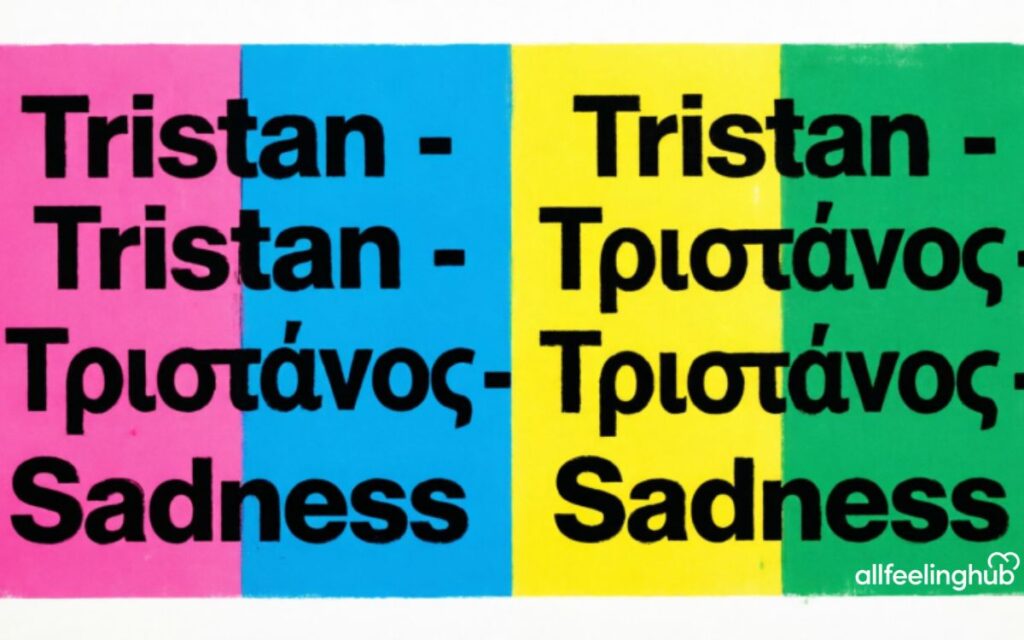
Tristan’s true origin traces to Celtic Britain as Drystan, appearing in early Welsh genealogies and Pictish inscriptions centuries before its more famous literary use. From there, the name was shaped by the Old French word triste (“sad”) through its association with the tragic romance of Tristan and Iseult, a story that spread across medieval Europe through French, German, and English retellings.
This literary spread is ultimately what carried the name into modern usage, eventually reaching English-speaking countries and gaining broader popularity in the 20th century as parents were drawn to its romantic sound, largely disconnected from its more obscure Celtic and legendary roots.
Absence From Scripture Doesn’t Mean Spiritual Emptiness
A name doesn’t need to appear in the Bible to hold real spiritual meaning for a family. Many parents intentionally infuse a name with faith through dedication prayers, chosen scripture verses spoken over the child, and a life lived with Christian character — regardless of the name’s linguistic or historical background.
This is an important reframe for families who feel disappointed to learn Tristan isn’t biblical: meaning can be built, not just inherited. A name becomes spiritually significant through how it’s prayed over, spoken, and lived out over a lifetime, not solely through its presence or absence in an ancient text.
The Spiritual Themes That Make Tristan Resonate
Tristan resonates spiritually for many because its “sorrow” meaning mirrors a theme found throughout the Bible: that grief and hardship are not the end of the story. This thematic echo, even without direct scriptural roots, is part of why the name continues to feel meaningful to Christian families searching for depth beyond surface-level positivity.
Verses about comfort for the brokenhearted and joy following mourning give the name’s traditional meaning a redemptive spiritual angle, transforming what could be seen as a heavy or somber meaning into something hopeful. This reframing allows the name to carry emotional honesty — acknowledging that life includes sorrow — while still pointing toward comfort and restoration.
Biblical Verses That Reflect Tristan’s Meaning
- “He heals the brokenhearted and binds up their wounds.” (Psalm 147:3)
- “Praise be to the God of all comfort, who comforts us in all our troubles.” (2 Corinthians 1:3-4)
- “In this world you will have trouble. But take heart! I have overcome the world.” (John 16:33)
Together, these verses reinforce a consistent biblical pattern: sorrow is real and acknowledged, but it is met with healing, comfort, and ultimate victory rather than despair. For a name popularly associated with sadness, these passages offer a way to reframe that meaning through a lens of hope rather than resignation.
What This Means for People Named Tristan
If your name is Tristan, it means your name carries a rich literary and cultural history rather than a scriptural one — and that’s not a lesser story, just a different one. The name connects you to centuries of storytelling, medieval romance, and a name that has continued to resonate with parents for its beauty and emotional depth long after its legendary origins were mostly forgotten.
Many people find meaning not in where a name originated, but in the character, values, and faith they choose to build around it throughout their life. Whether or not Tristan appears in Scripture has little bearing on the life someone with that name goes on to live, and plenty of people named Tristan have built lives rooted deeply in Christian faith, regardless of their name’s non-biblical origins.
Frequently asked questions
Is Tristan Mentioned in the Bible?
No, Tristan is not mentioned anywhere in the Bible.
Is Tristan a Biblical Name?
No, Tristan is not a biblical name because it comes from Celtic origins rather than Hebrew, Aramaic, or Greek.
What Does Tristan Mean in the Bible?
Tristan has no biblical meaning since the name does not appear in Scripture.
Does the Bible Mention Anyone Named Tristan?
No, there are no biblical figures or characters named Tristan.
Can Christians Use the Name Tristan?
Yes, Christians can use the name Tristan even though it is not found in the Bible.
What Is the Spiritual Meaning of Tristan?
Spiritually, Tristan is often associated with qualities such as courage, loyalty, integrity, and perseverance, though these are not biblical definitions.
Is Tristan a Hebrew Name?
No, Tristan is not a Hebrew name; it is widely recognized as having Celtic origins.
Are There Bible Verses Related to the Name Tristan?
There are no Bible verses that mention Tristan, but verses about faith, courage, wisdom, and love are often chosen to reflect its positive qualities.
Why Do People Think Tristan Is in the Bible?
Some people assume Tristan is biblical because of its traditional sound and long history, but it does not appear in the Bible.
Why Do Parents Choose the Name Tristan?
Many parents choose Tristan because of its timeless style, Celtic heritage, and associations with loyalty, bravery, and noble character.
Conclusion
Although Tristan is not mentioned in the Bible, many people are curious about its spiritual significance because of its popularity and timeless appeal. The name has Celtic origins rather than Hebrew or biblical roots, so it does not appear among the names found in Scripture. However, many associate Tristan with admirable qualities such as courage, loyalty, honor, and perseverance—character traits that are highly valued throughout the Bible.
Choosing the name Tristan can still carry personal and spiritual meaning, even without a direct biblical connection. A person’s faith, values, and actions give lasting significance to a name far more than its appearance in Scripture. Whether you’re researching Tristan for its biblical relevance, cultural history, or symbolic meaning, it remains a classic name with enduring character and positive associations.

David is a passionate writer with 4 years of experience creating heartfelt prayers, blessings, and inspirational messages. At https://allfeelinghub.com/ , he shares faith-filled content designed to inspire hope, strengthen spirituality, and bring comfort, peace, and encouragement to readers worldwide.