

Many people are curious about the Tristan Meaning in the Bible and whether the name has a biblical connection. While Tristan is not mentioned directly in Scripture, it has a fascinating history and a meaning that many Christians find compatible with biblical values such as courage, loyalty, and perseverance. Exploring its origin alongside a biblical perspective can help you better understand its spiritual significance.
In this guide, you’ll learn the true origin and meaning of the name Tristan, whether it has any biblical roots, and how it can be viewed through a Christian lens. Whether you’re choosing a meaningful baby name, researching its spiritual symbolism, or simply interested in its history, this article provides a clear and balanced overview of Tristan Meaning in the Bible.
Tristan Meaning in the Bible: Spiritual Traits and Personality
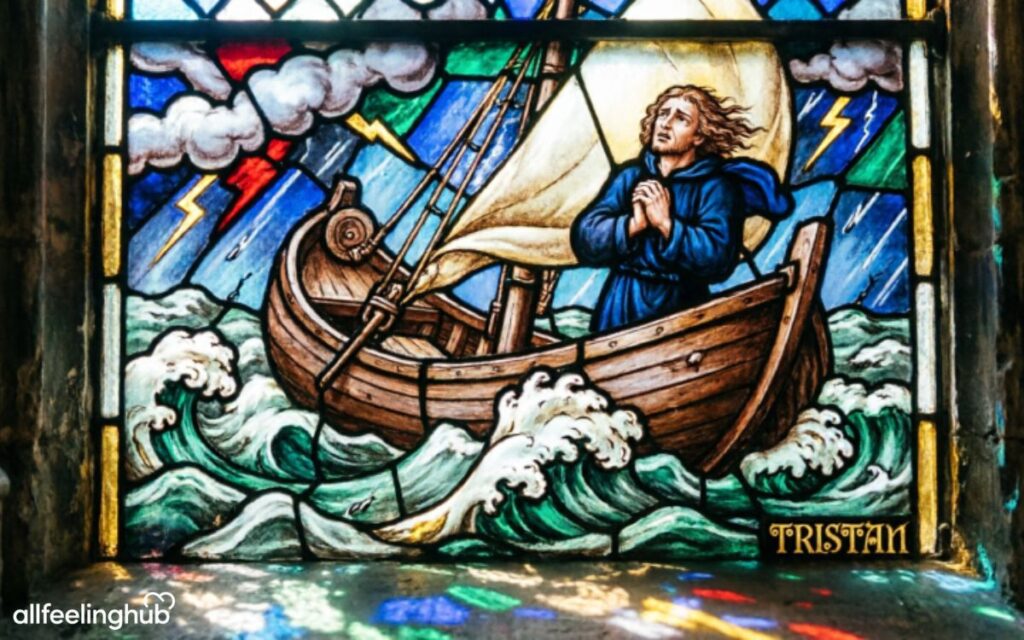
The name Tristan, while not found directly within the pages of Scripture, carries spiritual traits that align meaningfully with biblical values and Christian character formation. Those named Tristan are often described as deeply sensitive, loyal, and passionately devoted to the people and causes they love. These qualities resonate with biblical teachings about faithfulness, sacrificial love, and wholehearted devotion to God and others. The spiritual personality associated with Tristan reflects a soul that feels things deeply and expresses love with genuine intensity.
Biblical wisdom suggests that such depth of feeling, when rightly directed toward God, becomes one of the most powerful expressions of faith. Proverbs 4:23 instructs believers to guard their hearts above all else, recognizing the heart as the wellspring of authentic spiritual life.
What Does the Name Tristan Mean?
The name Tristan carries several layers of meaning depending on which etymological tradition one consults and which historical period shapes the interpretation. The most widely accepted primary meaning connects to the Celtic root words for noise, tumult, or din, suggesting a name associated with energy, force, and the kind of presence that makes itself felt in any environment.
A secondary and culturally influential meaning connects the name to the Latin word tristis, meaning sad or sorrowful, through the folk etymology that medieval romance writers promoted enthusiastically. This connection to sadness gives the name a poetic and reflective dimension that many find spiritually resonant, since the psalms and prophetic writings of Scripture frequently embrace lamentation as a genuine and honoring form of spiritual expression.
Etymology and Historical Origins of Tristan
The etymological journey of the name Tristan spans more than fifteen centuries and several distinct linguistic traditions, beginning in the Celtic-speaking world of early medieval Britain. The oldest documented form of the name is Drystan or Drustan, found in Brythonic Celtic languages spoken in Wales, Cornwall, and Brittany during the post-Roman period. An inscription dated to approximately the sixth century CE, found near Fowey in Cornwall, preserves the Latin form Drustanus and represents the earliest physical evidence of the name in use.
The transmission of the name from Celtic oral tradition into written literature occurred primarily through the twelfth-century French romance tradition, when poets including Béroul and Thomas of Britain composed influential written versions of the Tristan and Iseult legend. French phonology transformed the Celtic initial Dr- sound into the more familiar Tr- sequence, producing the spelling Tristan that became the standard form throughout literate Europe.
Is Tristan Mentioned in the Bible?
Tristan is not mentioned anywhere within the canonical books of the Bible, either in the Old Testament or the New Testament. This absence is entirely expected given the name’s origins in the Celtic-speaking world of early medieval Britain, a culture and geography entirely unconnected to the ancient Near Eastern world that produced biblical literature.
The Hebrew Scriptures drew their personal names from Semitic linguistic roots and from the specific cultural and religious experiences of the Israelite people. The New Testament added names from Greek, Latin, and Aramaic traditions but again drew from the Mediterranean world rather than from the Celtic northwest. No form of the name Drystan, Drustan, Tristan, or any recognizable variant appears in Hebrew, Aramaic, or Greek biblical manuscripts. The name simply did not exist in the linguistic universe from which biblical names were drawn.
Does Tristan Have a Hebrew Meaning?
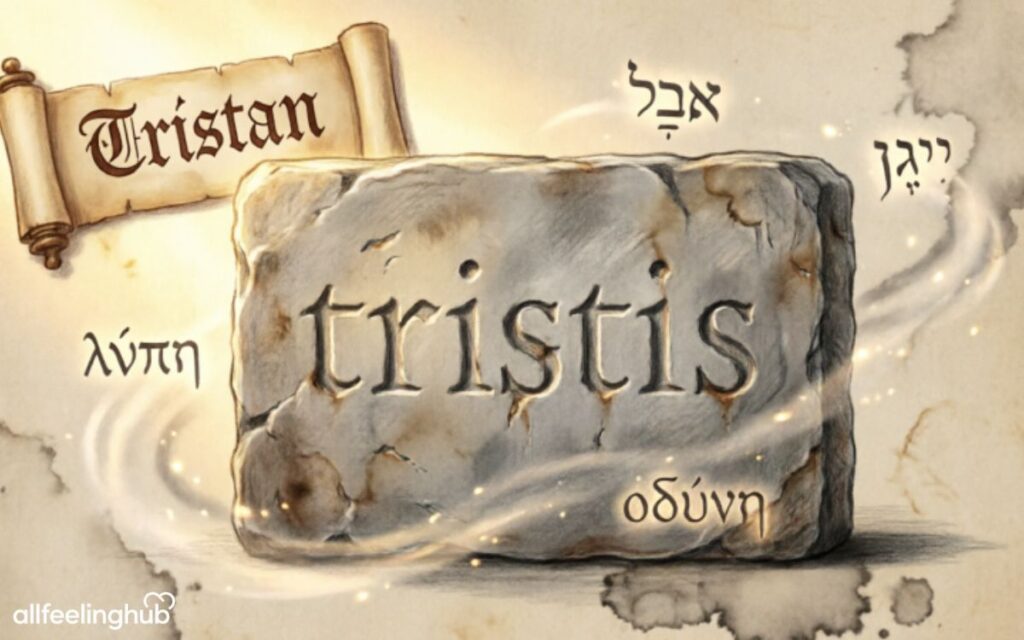
The name Tristan does not have a direct Hebrew meaning because it did not originate from the Hebrew language or from the Semitic linguistic family to which Hebrew belongs. Hebrew personal names typically derive from verbal roots that carry specific theological or descriptive meanings, such as the name Joshua meaning God saves or the name Samuel meaning heard by God. Tristan derives from Proto-Celtic linguistic roots that are entirely distinct from the Semitic root system and carry no equivalent in Hebrew vocabulary.
Some name interpretation resources attempt to find Hebrew parallels by phonetic association rather than genuine etymology, sometimes connecting the sound of Tristan to Hebrew words meaning trouble or sorrow, but these connections are linguistic coincidences rather than genuine etymological relationships. The honest answer for Christian parents who want to understand Tristan’s spiritual meaning is that the name’s significance comes from its Celtic origins, its Latin folk etymology connecting it to sadness, and its legendary associations rather than from any Hebrew linguistic foundation.
Is Tristan a Biblical Name?
Tristan is not a biblical name in the strict definition of that term, which refers to names that appear within the canonical text of Scripture or that derive directly from the Hebrew, Aramaic, or Greek languages of the biblical world. However, many Christian traditions use the term biblical name more broadly to include names that reflect biblical values, themes, or theological concepts even when the names themselves do not appear in Scripture. By this broader definition, Tristan can be considered a name with genuine biblical resonance because its associated meanings and legendary themes connect meaningfully to scriptural teachings.
The themes of sacrificial love, faithful devotion, the experience of sorrow as a pathway to deeper love, and the soul’s passionate longing for authentic connection all have rich precedents in biblical literature. The Song of Solomon celebrates passionate devoted love with poetic intensity that mirrors the depth of feeling associated with the Tristan name tradition.
Spiritual Significance of the Name Tristan
The spiritual significance of Tristan emerges from the intersection of its etymological heritage, its legendary associations, and the universal human experiences those associations represent within a faith context. The name’s connection to deep feeling and passionate devotion speaks to the biblical understanding of love as one of the central virtues of spiritual life, expressed most powerfully in Jesus’s teaching that the greatest commandments are to love God with all one’s heart and to love one’s neighbor as oneself. The element of sorrow embedded in the name through its folk etymology resonates with biblical teachings that embrace lamentation and grief as genuine spiritual postures rather than failures of faith.
Psalm 22, the lament psalms throughout the Psalter, and the entire book of Lamentations all affirm that honest expressions of sorrow before God are among the most authentically spiritual acts available to believers. The name’s legendary association with a figure who chooses love over self-interest and who remains faithful through impossible circumstances speaks to the New Testament’s vision of love as a force that bears all things, believes all things, and endures all things as described in 1 Corinthians 13.
Christian Symbolism and Faith Connections
| Christian Theme | Connection to Tristan | Biblical Reference |
| Sacrificial Love | Tristan’s legendary devotion mirrors self-giving love | John 15:13 |
| Faithful Endurance | The name’s warrior heritage speaks to perseverance | Hebrews 12:1 |
| Honest Lamentation | The sadness etymology aligns with biblical lament | Psalm 22:1-2 |
| Passionate Devotion | Deep feeling as a spiritual virtue | Deuteronomy 6:5 |
| Redemptive Suffering | Sorrow transforming into deeper love | Romans 8:28 |
| Strength in Weakness | The knight’s vulnerability alongside courage | 2 Corinthians 12:9 |
| Seeking the Lost | The legend’s searching quality | Luke 15:4 |
The Christian symbolism associated with Tristan operates primarily through the name’s legendary and etymological dimensions rather than through direct scriptural citation.
The legendary figure of Tristan, as a warrior who is also a poet and musician, reflects the biblical vision of the warrior-shepherd exemplified most fully in the person of David, king of Israel. David combined military courage with musical sensitivity, wrote poetry of extraordinary emotional depth, and experienced both the heights of faithful devotion and the depths of painful failure, a combination that mirrors the complex humanity associated with the Tristan tradition.
Key Bible Verses That Connect With the Name Tristan
Several scriptural passages connect meaningfully with the themes and qualities associated with the name Tristan, offering biblical grounding for the name’s spiritual dimensions even in the absence of direct biblical precedent. Jeremiah 29:11 speaks of God’s plans for hope and a future, a promise that resonates with the name’s association with searching and longing for something greater.
John 15:13 declares that greater love has no one than this, that someone lay down their life for their friends, directly echoing the sacrificial dimension of the Tristan legend. Psalm 34:18, which states that the Lord is close to the brokenhearted and saves those who are crushed in spirit, connects to the melancholy dimension the name carries through its folk etymology. Romans 8:28, the promise that all things work together for good for those who love God, speaks to the redemptive possibility that exists within even the saddest dimensions of the human experience the name evokes.
Biblical Traits Associated with the Name Tristan
| Biblical Trait | Description | Scripture Support |
| Deep Loyalty | Faithful commitment to loved ones regardless of cost | Ruth 1:16 |
| Passionate Devotion | Wholehearted love as the highest virtue | Mark 12:30 |
| Artistic Sensitivity | Creative expression as worship | Psalm 150 |
| Courageous Heart | Bravery in the face of overwhelming opposition | Joshua 1:9 |
| Compassionate Sorrow | Grieving genuinely as an act of love | John 11:35 |
| Seeking Wisdom | The internal searching quality of the name | Proverbs 4:7 |
| Sacrificial Love | Putting others before self as a spiritual discipline | Philippians 2:3-4 |
The biblical traits associated with Tristan reveal a multidimensional spiritual personality that draws from the full range of human capacity for feeling and faith. The combination of courage and sensitivity, of warrior strength and poetic depth, reflects the biblical understanding that genuine spiritual maturity involves the integration of seemingly opposite qualities rather than the suppression of one in favor of another. The Psalms demonstrate this integration perfectly, moving within single compositions between fierce declarations of God’s power and vulnerable expressions of personal anguish.
.Biblical Names Similar to Tristan
Several biblical names share thematic, phonetic, or character-related similarities with Tristan that may appeal to parents drawn to the name’s qualities while seeking a more directly scriptural alternative. Gideon is a Hebrew name meaning great warrior that shares the warrior heritage of Tristan while appearing directly in the Old Testament as a figure who combined military courage with genuine spiritual surrender. Judah, meaning praise, shares the artistic and passionate dimensions of the Tristan name tradition through its association with the tribe that produced both David the psalmist and Jesus the Messiah.
Silas, a name of Greek or Latin origin meaning forest or the name Silvanus meaning of the woods, shares the Celtic natural world associations of the Tristan heritage while appearing as a companion of Paul in the New Testament. Nathan, meaning he gave, shares the artistic dimension through Nathan the prophet and Nathan the musician mentioned in David’s court.
The Origin of Tristan in Celtic and Christian Culture

The origin of Tristan in Celtic culture positions the name at the intersection of two great European spiritual traditions, the ancient Celtic world with its intense engagement with nature, fate, and the invisible world, and the emerging Christian tradition that was transforming Celtic culture during precisely the period when the name first appears in historical record. The sixth-century Cornwall where the name Drustanus is first inscribed was a world in the process of Christianization, where Celtic oral traditions and the newly arrived Christian faith were being woven together into the distinctive Celtic Christian tradition that would eventually produce figures like Saint Patrick, Saint Columba, and the monastics of Iona and Lindisfarne.
The name Tristan therefore carries within it the spiritual heritage of Celtic Christianity, a tradition known for its intense awareness of God’s presence in the natural world, its embrace of both joy and lamentation as authentic spiritual expressions, and its understanding of the journey of faith as a genuine adventure into the unknown.
Tristan Name Meaning in Hebrew and Greek
Although Tristan does not originate in Hebrew or Greek, examining the name through these biblical language lenses offers interesting spiritual insights that many Christian families find meaningful. In Hebrew linguistic analysis, some interpreters connect the sound of Tristan’s first syllable to the Hebrew root meaning distress or narrow place, which in Hebrew spiritual thought often represents the experience of crisis that becomes the occasion for deeper encounter with God.
The Hebrew concept of tzara, meaning trouble or distress, shares some phonetic resonance with the tri- beginning of Tristan, though this connection is phonetic rather than etymological. In Greek, the prefix tri- meaning three carries significant theological weight in Christian tradition through its association with the Trinity, the foundational Christian understanding of God as Father, Son, and Holy Spirit. While this association is not part of the name’s actual etymology, Christian parents sometimes find it spiritually significant as a personal reflection.
The Difference Between Tristan and Tristen
The difference between Tristan and Tristen is primarily one of spelling convention rather than meaning, since both forms represent the same name with the same etymological heritage and the same cultural associations. Tristan with an A is the original, historically established, and internationally recognized standard spelling, derived directly from the French literary tradition of the twelfth century that gave the name its enduring place in Western culture. Tristen with an E is a modern American variant that emerged primarily in the late twentieth century, representing a phonetic respelling that substitutes the vowel most naturally produced in English unstressed syllables for the etymologically correct A.
For Christian parents considering the spiritual dimensions of the name, there is no meaningful difference between the two forms in terms of faith significance or spiritual meaning. Both carry the same legendary associations, the same folk etymology connecting to sorrow, and the same compatibility with Christian values.
The Cultural and Religious Impact of the Name Tristan

The cultural and religious impact of the name Tristan across more than a millennium of Western history reveals how a name can become a carrier of profound human values and spiritual aspirations across successive generations and diverse cultural contexts. In the medieval period, the Tristan legend served as a vehicle for exploring the relationship between human love and divine love, with theologians and mystics using the story’s themes to illuminate the soul’s passionate longing for God.
This theological appropriation of the legend gave the name a religious dimension that extended beyond its Celtic origins into the heart of Christian spiritual reflection. In the modern period, the name’s cultural impact has been sustained through Richard Wagner’s revolutionary opera Tristan und Isolde, which transformed the medieval legend into a meditation on transcendence, death, and the longing for ultimate union that has profound spiritual resonance for Christian listeners attuned to its themes.
What the Bible Teaches About Names and Identity
The Bible takes the significance of names with extraordinary seriousness, treating names not as arbitrary labels but as expressions of essential identity, divine purpose, and covenant relationship. In Genesis, God gives names to the fundamental elements of creation, demonstrating that naming is a divine activity that establishes the nature and purpose of the thing named.
Throughout Scripture, God changes names at pivotal moments of spiritual transformation, changing Abram to Abraham, Jacob to Israel, and Simon to Peter, indicating that new names signal new identities and new divine callings. The book of Revelation promises that overcoming believers will receive a new name known only to God, suggesting that names in the divine economy carry eternal significance beyond their earthly usage. For Christian parents choosing names, this biblical theology of naming suggests that the name given to a child is genuinely significant, not magically determinative but meaningfully formative.
Tristan Across Different Christian Traditions
| Christian Tradition | View of the Name Tristan | Naming Practice |
| Roman Catholic | Acceptable though not a saint’s name | Parents free to choose |
| Eastern Orthodox | Non-traditional, not in Orthodox calendar | Rare but permitted |
| Anglican and Episcopal | Embraced due to British Celtic heritage | Relatively common |
| Protestant Evangelical | Evaluated by personal and biblical values | Growing in popularity |
| Celtic Christianity | Deeply resonant with tradition | Strongly positive |
| Pentecostal and Charismatic | Focus on character over biblical origin | Used and respected |
| Reformed and Presbyterian | No requirement for biblical names | Chosen freely |
Different Christian traditions approach the naming of children with different theological frameworks, and these differences affect how the name Tristan is received and used within each community. The Roman Catholic tradition historically preferred names from the calendar of saints, and since Tristan does not appear in the official canon of Catholic saints, the name would not have a feast day attached to it as traditional Catholic naming practice preferred.
Why Christian Parents Choose the Name Tristan

Christian parents who choose the name Tristan for their children typically do so for reasons that reflect a thoughtful engagement with the name’s cultural, aesthetic, and spiritual qualities rather than a direct biblical mandate. The name’s association with passionate and faithful love appeals to parents who hope their child will embody the biblical command to love God and neighbor wholeheartedly.
The warrior dimension of the name’s Celtic heritage resonates with the New Testament’s repeated use of military metaphors for the Christian life, including the armor of God in Ephesians 6 and the charge to fight the good fight of faith in 1 Timothy 6. The artistic and musical dimensions of the legendary Tristan’s character appeal to parents who value creativity as a form of worship and who hope to raise children who express their faith through artistic gifts. The name’s combination of strength and sensitivity reflects the Christian ideal of leadership as servant leadership, the strong person who uses their strength to protect and serve others rather than to dominate them.
Is Tristan a Good Christian Baby Name?
Tristan is an excellent choice for Christian parents by virtually every relevant measure, offering a combination of spiritual resonance, historical depth, aesthetic appeal, and practical functionality that few names can match. The name’s compatibility with Christian values is genuine and multidimensional, connecting to biblical themes of love, faithfulness, sacrifice, artistic expression, and the honest acknowledgment of human sorrow as a valid spiritual experience.
The name’s Celtic Christian heritage gives it a specifically Christian dimension that distinguishes it from purely secular names, since the world that produced the name was one actively being shaped by the encounter between ancient Celtic culture and the Christian gospel. For Christian parents who value names with historical depth and genuine cultural roots, Tristan offers an authenticity that purely modern invented names cannot provide. The name ages well through every stage of life, functions beautifully in both formal and casual contexts, and provides the natural nickname Tris for everyday use while preserving the full name for significant occasions.
Practical Guidance for Parents Choosing the Name Tristan

Parents considering the name Tristan for a Christian child will benefit from several practical considerations that can help them make a thoughtful and confident decision. Begin by exploring the full range of the name’s meaning, including both the Celtic warrior heritage and the Latin folk etymology connecting it to sorrow, to ensure that the name’s complete spiritual profile resonates with your family’s values and hopes for your child.
Consider how the name pairs with your family surname, since Tristan works best with surnames of two or more syllables due to its own two-syllable structure. Think about the community context in which your child will grow up and whether the name will be well-received and easily managed in that context, including how teachers and peers will handle the spelling. Pray specifically about the name, asking God to confirm whether it aligns with His purposes for the child you are expecting, since the biblical theology of names suggests that this spiritual discernment is genuinely appropriate.
Frequently asked questions
What Does Tristan Mean in the Bible?
Tristan has no direct biblical meaning because the name does not appear anywhere in the Bible.
Is Tristan Mentioned in the Bible?
No, Tristan is not mentioned in either the Old Testament or the New Testament.
Is Tristan a Biblical Name?
No, Tristan is not a biblical name; it is of Celtic origin rather than Hebrew, Aramaic, or Greek.
What Is the Spiritual Meaning of Tristan?
The name Tristan is often associated with qualities like courage, loyalty, perseverance, and honor, though these are not biblical definitions.
Can Christians Use the Name Tristan?
Yes, Christians can choose the name Tristan since it does not conflict with biblical teachings.
What Is the Origin of the Name Tristan?
Tristan is a Celtic name that became well known through the medieval legend of Tristan and Isolde.
Are There Bible Verses Related to Tristan?
While no Bible verses mention Tristan by name, many people associate it with scriptures about faith, courage, love, and integrity.
What Personality Traits Are Linked to the Name Tristan?
Tristan is commonly linked with bravery, compassion, loyalty, determination, wisdom, and leadership.
Is Tristan a Good Christian Baby Name?
Yes, Tristan is a good Christian baby name for parents who appreciate its positive character traits and historical significance.
Why Do Parents Choose the Name Tristan?
Many parents choose Tristan because of its timeless appeal, Celtic heritage, and associations with strength, loyalty, and noble character.
Conclusion
Although many people search for the Tristan meaning in the Bible, the name Tristan is not found in the Bible and does not have a direct biblical or Hebrew origin. It is traditionally linked to Celtic heritage and gained popularity through medieval legends. Even without a biblical appearance, the name is often associated with admirable qualities such as courage, loyalty, honor, and perseverance, which closely reflect many values taught throughout Scripture.
The spiritual value of a name comes not only from its origin but also from the character and faith of the person who bears it. Whether you’re exploring Tristan for its biblical significance, cultural history, or personal meaning, it remains a timeless name with a rich legacy and positive symbolism. For many families, Tristan represents strength, integrity, and enduring character—qualities that align well with Christian principles.

David is a passionate writer with 4 years of experience creating heartfelt prayers, blessings, and inspirational messages. At https://allfeelinghub.com/ , he shares faith-filled content designed to inspire hope, strengthen spirituality, and bring comfort, peace, and encouragement to readers worldwide.