

Many people search for the Tristan Meaning in Hebrew to find out whether the name has Hebrew origins or a connection to biblical tradition. Although Tristan is not a Hebrew name, it is often explored alongside Hebrew and biblical names because of its popularity and timeless appeal. Understanding its true origin and how it relates to Hebrew culture can help clear up common misconceptions.
In this guide to Tristan Meaning in Hebrew, you’ll discover the name’s actual origin, traditional meaning, and whether it has any Hebrew or biblical significance. You’ll also learn about its spiritual symbolism, cultural background, and why Tristan continues to be a meaningful choice for parents seeking a name with strength, character, and lasting charm.
How Tristan Is Written in Hebrew

Tristan has no native Hebrew spelling because it isn’t a Hebrew word or name — what you’ll typically find instead is a transliteration, which simply represents the sounds of “Tristan” using Hebrew letters rather than translating any meaning. Written this way, Tristan is commonly rendered as טריסטן in Hebrew script, letter by letter matching the English pronunciation rather than reflecting any Hebrew root or definition.
This is the same approach used for countless non-Hebrew names when they need to be written in Hebrew — for a birth certificate, an Israeli ID card, or simply for use within a Hebrew-speaking household. It’s a phonetic convenience, not evidence of Hebrew origin.
How to Pronounce Tristan in Hebrew
When transliterated, Tristan is pronounced very similarly to its English pronunciation: TREES-tahn (טְרִיסְטָן), with the emphasis typically falling on the first syllable, consistent with how the name is said in English, French, and most European languages. Hebrew doesn’t have a “silent” or altered pronunciation rule that would change how the name sounds when written in Hebrew letters — it’s designed to replicate the original sound as closely as Hebrew phonetics allow.
Because Hebrew doesn’t naturally end many names in a hard “n” sound followed by a consonant cluster like “st,” native Hebrew speakers may pronounce it with a very slightly softened ending, but this is a minor phonetic adaptation rather than a meaningful linguistic difference.
Hebrew Names with Similar Meanings to Tristan
Since Tristan’s popular meaning centers on “sorrow,” these genuinely Hebrew, biblically documented names carry related emotional themes:
- Jabez — meaning “he will cause pain,” from 1 Chronicles, whose story turns from sorrow toward blessing
- Mara — meaning “bitter,” the name Naomi gave herself during grief in the Book of Ruth
- Iyov (Job) — not literally meaning sorrow, but permanently associated in Jewish and Christian tradition with suffering, patience, and endurance
These names offer families a way to reflect Tristan’s emotional depth while staying rooted in an authentic Hebrew and biblical tradition.
Hebrew Names That Share Similar Qualities
Beyond the “sorrow” theme, some Hebrew names echo the emotional depth, loyalty, and quiet strength often associated with Tristan through his legendary backstory:
- Amos — meaning “burden” or “carried,” reflecting resilience
- Boaz — meaning “strength,” associated with steadfastness and loyalty in the Book of Ruth
- Gideon — meaning “mighty warrior” or “feller of trees,” associated with courage under pressure
These names offer a different angle — rooted in strength and steadiness rather than sorrow — for families drawn to Tristan’s more courageous or loyal qualities.
The Spiritual Importance of Names in Hebrew Tradition
In Hebrew and Jewish tradition, names are understood to carry real spiritual weight, often reflecting a hope, a blessing, or a connection to a person’s character and destiny. This is reflected throughout the Hebrew Bible, where name changes often mark pivotal spiritual moments — Abram becoming Abraham, Jacob becoming Israel — signaling a shift in identity or calling rather than simply a change in title.
This tradition has carried forward into modern Jewish naming customs, where a name is often chosen carefully, sometimes to honor a deceased relative (common in Ashkenazi tradition) or to reflect a specific hope or virtue the parents wish for their child (more common in Sephardic and Mizrahi tradition). Names in this framework aren’t seen as arbitrary labels but as something closely tied to a person’s spiritual identity.
What the Hebrew Bible Teaches About Names
The Hebrew Bible repeatedly treats names as meaningful rather than incidental. Beyond the well-known examples of Abraham and Israel, the text is full of names chosen specifically for their meaning — Isaac (“he will laugh,” tied to Sarah’s disbelief and later joy), Moses (“drawn out,” referencing his rescue from the Nile), and Solomon (“peace,” reflecting the hoped-for nature of his reign.
This pattern reflects a broader theological principle: that a name can carry prophetic or reflective weight, pointing to something about a person’s role, character, or story. While this principle is deeply rooted in Hebrew Scripture, it doesn’t extend to non-biblical names like Tristan, which simply weren’t part of that textual and cultural tradition.
Hebrew Name Traditions Through History

Hebrew naming traditions have evolved considerably across different eras and communities. In ancient Israel, names were often directly descriptive or theophoric (incorporating a form of God’s name, such as in Elijah, “my God is Yahweh”). During the diaspora, Jewish communities in different regions adapted local languages and customs while often maintaining a Hebrew name for religious purposes alongside a secular name used in daily life.
This dual-naming tradition — a Hebrew name for religious contexts and a different, often local-language name for everyday use — remains common today, and it’s part of why many Jewish families feel comfortable giving a child a name like Tristan for daily use while also selecting a separate Hebrew name for religious ceremonies like a brit milah or baby naming.
The Role of Names in Ancient Israel
In ancient Israel, a name often functioned as more than identification — it could serve as a statement of faith, a record of circumstances surrounding a birth, or even a form of prophecy. Parents sometimes named children in response to specific life events, such as Ichabod (“the glory has departed”) following a national tragedy, or Samuel (“God has heard”) after a long-awaited answer to prayer.
This context helps explain why Hebrew names carry such lasting cultural and religious weight — they were never just labels, but active parts of a family’s spiritual narrative, something quite different from how names like Tristan developed within European legend and literary tradition.
Choosing Tristan from a Faith-Based Perspective
From a faith-based perspective, choosing Tristan doesn’t need to conflict with Jewish or Christian values, even though the name itself isn’t rooted in either tradition. Many families choose to give the name intentional spiritual meaning through blessings, prayers, or a connected Hebrew or biblical middle name, rather than relying on Tristan’s actual etymology to carry that weight.
This approach reflects a broader, common practice across many faith traditions: separating a name’s aesthetic or personal appeal from its spiritual significance, and building the latter intentionally rather than assuming it’s inherent to the name itself.
Tristan in Modern Hebrew-Speaking Communities
Tristan is used, though not especially common, among Hebrew-speaking communities, generally among families with European, mixed-cultural, or diaspora backgrounds rather than being a traditional choice within longstanding Israeli naming customs. Its use tends to reflect broader global naming trends more than any specific Hebrew or Israeli cultural movement.
In everyday use within Israel, names of this kind are typically transliterated as needed for documents and communication, following the same phonetic approach outlined earlier in this guide.
The Popularity of Tristan in Israel

Tristan is not among the more common names in Israel, where naming trends have historically favored Hebrew names with clear biblical, modern Hebrew, or nature-based origins (such as Noa, Itai, or Yonatan). Its use in Israel tends to be limited to specific families with international ties, mixed heritage, or a particular personal affinity for the name’s European and literary associations.
This is consistent with broader patterns seen in many countries with strong linguistic and religious naming traditions, where names originating from unrelated cultural sources are used but remain a smaller minority compared to names drawn from the dominant local or religious tradition.
Hebrew Baby Names Compared to Tristan
Compared to Tristan, many popular Hebrew baby names carry direct, documented meanings tied closely to biblical narrative or Hebrew word roots — names like Noah (“rest” or “comfort”), Ariel (“lion of God”), or Talia (“dew from God”). Tristan, by contrast, carries a meaning rooted in Celtic and Old French tradition, giving it a very different kind of linguistic and cultural weight.
Both types of names can be equally meaningful to the families who choose them, but they represent different naming philosophies — one drawing from thousands of years of a specific religious and linguistic tradition, the other from centuries of European legend and romantic literature.
Similar Biblical Boy Names to Tristan
For families who like Tristan’s sound but want a name with genuine biblical roots, consider:
- Ethan — “strong” or “enduring” (1 Kings 4:31)
- Tobias — “God is good” (Book of Tobit)
- Asher — “happy” or “blessed” (Genesis 30:13)
- Boaz — “strength” (Book of Ruth)
Similar Biblical Girl Names to Tristan
If you’re looking for a girl’s name with a similarly emotional or evocative quality, rooted in genuine Hebrew biblical tradition, consider:
- Tamar — meaning “palm tree,” a name associated with resilience in Genesis and 2 Samuel
- Mara — meaning “bitter,” the name Naomi took during grief in Ruth
- Talia — meaning “dew from God,” associated with renewal and freshness
Tristan and the Meaning of Identity in Scripture
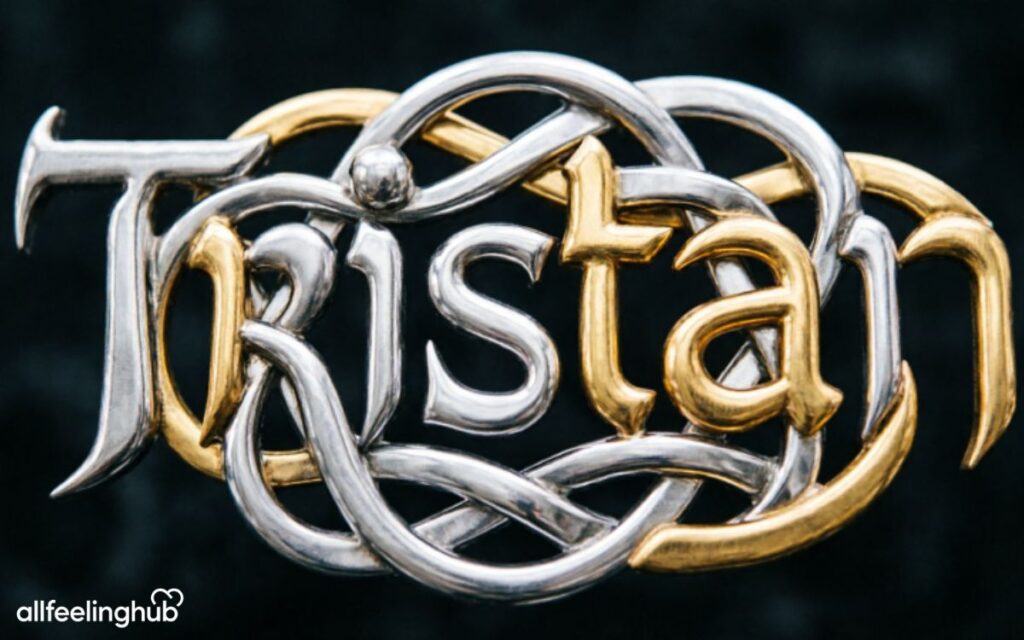
Scripture treats identity as something deeply tied to relationship with God rather than something fixed by a name alone — even biblical figures whose names carried heavy or difficult meanings, like Jabez, were not bound permanently by that meaning, but were shown to grow and change through faith and prayer. This principle applies just as meaningfully to someone named Tristan, even without a direct textual connection.
In this sense, Scripture offers a helpful framework for anyone concerned about Tristan’s “sorrow” association: identity, in a biblical view, is shaped far more by character, faith, and relationship than by etymology alone.
Why Tristan Is Often Confused with Biblical Names
The confusion often stems from the name’s serious, somewhat reverent sound, which can feel similar in tone to biblical names ending in “-an” or “-on.” It’s also frequently searched for alongside genuinely biblical names by parents comparing options, which can blur the line between names with documented scriptural roots and those that simply sound like they might.
Additionally, name-meaning websites optimized for search traffic sometimes present invented Hebrew or biblical meanings for names like Tristan because that’s the kind of content people are searching for, reinforcing a misconception that has no basis in verified linguistic history.
Tristan Meaning in Hebrew
To close with the most direct answer: Tristan has no authentic Hebrew meaning. It is not found in the Hebrew Bible, has no root in Hebrew vocabulary, and any Hebrew “definition” attached to the name is either a phonetic transliteration (writing the name using Hebrew letters) or an invented, unverified claim rather than genuine linguistic history. The name’s real story begins in Celtic Britain and continues through medieval French romance — a rich and meaningful history in its own right, just not a Hebrew one.
Does Tristan Have a Hebrew Meaning?
No, Tristan does not have a genuine Hebrew meaning. The name has no linguistic roots in Hebrew and does not appear in any Hebrew text, ancient or modern. Its true origins lie in Celtic and medieval European tradition, later shaped by Old French and Latin influence. Some baby-name websites list a “Hebrew meaning” for nearly every name in their database as a generic catch-all category, which has led to confusion — but there is no historical or etymological basis connecting Tristan to Hebrew.
Is Tristan a Hebrew Name?
Tristan is not a Hebrew name. It doesn’t derive from a Hebrew root word, doesn’t appear in Jewish naming traditions, and isn’t associated with any Hebrew biblical figure. Names like Tobias, Ezra, Noah, or Levi are genuinely Hebrew in origin; Tristan simply is not part of that linguistic family. Its closest true relatives are Celtic and French, not Semitic.
The Origin and History of the Name Tristan

Tristan is generally believed to descend from a Pictish or Celtic name, possibly Drustan, which was later absorbed into Old French romance literature. Medieval French and German writers reshaped the name while retelling Celtic legends, and it eventually merged phonetically with the Latin word tristis, meaning “sad” or “sorrowful.” By the 12th century, Tristan was firmly established in European storytelling — most famously through the tragic romance of Tristan and Isolde — and spread from there across France, Britain, and eventually the wider world.
What Does Tristan Mean in Hebrew?
Since Tristan has no authentic Hebrew root, it does not have a true Hebrew meaning or translation. If you were to phonetically approximate the name using Hebrew letters, it would simply be a transliteration — a way of writing the sound of the name in Hebrew script — not a translation carrying inherent Hebrew meaning. This is an important distinction: transliteration doesn’t confer origin or meaning, it’s just spelling the name using a different alphabet.
Tristan’s Connection to Hebrew Culture
Tristan has no historical connection to Hebrew culture, Jewish tradition, or the ancient Israelite world. It does not appear in Jewish naming customs, religious texts, or historical Hebrew records. Its cultural home is firmly in Celtic Britain and medieval continental Europe, later absorbed into the broader canon of Western romantic literature.
Biblical Perspective on the Name Tristan
From a biblical perspective, Tristan holds no scriptural weight because it never appears in the Bible. It isn’t the name of a prophet, king, disciple, or any other biblical figure. Parents who want a name with direct scriptural grounding may want to look elsewhere, though many parents today choose meaningful names based on personal or literary resonance rather than requiring a biblical citation.
Spiritual Symbolism of Tristan in Hebrew Tradition
Because Tristan has no place within Hebrew tradition, it carries no formal spiritual symbolism there. Any spiritual meaning attached to Tristan comes instead from its Celtic and literary legacy — themes of sorrow transformed into loyalty, and love enduring through hardship — rather than from Hebrew spiritual or mystical frameworks like Kabbalah or traditional Jewish naming symbolism.
Hebrew Words and Names Similar to Tristan
While Tristan itself isn’t Hebrew, parents drawn to its sound sometimes look at genuinely Hebrew names with a similar feel:
| Hebrew Name | Meaning | Similarity to Tristan |
| Tobias | “God is good” | Similar starting sound |
| Tavin | Modern Hebrew-influenced name | Similar rhythm |
| Uriel | “God is my light” | Strong, legendary tone |
| Asher | “Happy, blessed” | Comparable popularity level |
| Nathaniel | “Gift of God” | Similar romantic, classic feel |
These names offer authentic Hebrew roots for parents who want that linguistic connection alongside a name with emotional resonance.
Tristan Meaning Compared to Hebrew Baby Names

| Feature | Tristan | Typical Hebrew Baby Name |
| Origin | Celtic/Old French/Latin | Hebrew/Biblical |
| Core Meaning | “Sorrowful” or “bold” | Often tied to God, blessing, or virtue |
| Scriptural Presence | None | Frequently biblical |
| Cultural Root | Arthurian legend | Jewish and Israelite tradition |
| Popularity in US (2020s) | Consistently top 150–250 | Varies widely by name |
This comparison highlights that while Tristan and many Hebrew names are both popular and meaningful, they come from entirely separate linguistic and cultural traditions.
Is Tristan Mentioned in the Hebrew Bible?
No, Tristan is not mentioned anywhere in the Hebrew Bible (the Tanakh). It does not appear as a name, word, or reference in the Torah, Prophets, or Writings. The Hebrew Bible predates the emergence of the name Tristan by well over a thousand years, and the two have no textual overlap whatsoever.
Is Tristan Mentioned in the Bible?
Tristan does not appear in the Bible at all — not in the Old Testament (Hebrew Bible) and not in the New Testament. This surprises some parents who assume classic-sounding names must have scriptural roots, but Tristan’s fame comes entirely from medieval legend, not religious scripture.
The Hebrew Meaning and Origin of the Name Tristan
To be direct and accurate: there is no Hebrew meaning or origin for the name Tristan. Its documented origin is Celtic, filtered through Old French romance literature and reinforced by a resemblance to the Latin word for sorrow. Any source claiming a Hebrew origin for Tristan is not working from established etymology.
Bible Verses That Reflect Tristan’s Meaning
Since Tristan is not a biblical name, there are no verses specifically tied to it. However, some parents enjoy pairing a name’s broader meaning — in Tristan’s case, themes of sorrow transformed into devotion and loyalty — with verses that reflect similar emotional themes, such as passages about steadfast love or comfort in sorrow. This is a personal, symbolic pairing rather than a textual or historical connection.
Biblical and Spiritual Significance of Tristan in Hebrew
Because Tristan has no basis in Hebrew or biblical tradition, it holds no inherent biblical or spiritual significance within that framework. Its spiritual resonance, where it exists, comes from its literary legacy in Arthurian legend rather than from religious scripture or Hebrew spiritual thought.
What Does Tristan Mean in Greek
Like Hebrew, Greek is not a genuine root language for Tristan. The name does not appear in classical Greek mythology, literature, or naming traditions, and any claim that Tristan is “Greek for sorrow” confuses it with its actual Latin-influenced meaning. The true linguistic path runs through Celtic and Old French/Latin, not Greek.
Is It a Good Christian Name?

Tristan can absolutely work as a Christian name, even without biblical origins. Many names widely used by Christian families today — including many popular in Western Europe and North America — come from cultural or literary traditions rather than scripture. What matters most to many Christian parents is the character and values a name represents, and Tristan’s association with loyalty, honor, and devoted love aligns well with values many Christian families appreciate, even though the name itself isn’t scriptural.
Tristan in Legends vs Christian Truth
It’s worth separating legend from scripture clearly: Tristan’s story comes from medieval Arthurian romance — a rich but entirely secular literary tradition — not from Christian doctrine or biblical truth. The story of Tristan and Isolde deals with themes like forbidden love and fate, which differ significantly from biblical teachings on marriage and covenant love. Parents who value scriptural alignment should view Tristan’s legend as cultural literature, not religious teaching.
Tristan Name Symbolism and Interpretation in Hebrew Culture
Since Tristan has no place in authentic Hebrew culture, there is no traditional Hebrew symbolism attached to it. Any symbolic meaning is drawn instead from its Celtic and European literary roots — sorrow, loyalty, and romantic devotion — rather than from Hebrew naming philosophy, which often centers on attributes of God or blessings for the child.
The Difference Between Tristan’s Celtic and Hebrew Origins
| Aspect | Celtic Origin (Real) | Hebrew Origin (Not Applicable) |
| Historical basis | Documented Pictish/Celtic root name (Drustan) | No documented link exists |
| Language family | Indo-European (Celtic branch) | Afro-Asiatic (Semitic branch) |
| Literary source | Arthurian romance, medieval Europe | N/A — no Hebrew literary appearance |
| Meaning | “Sorrowful,” later “bold” | No authentic Hebrew meaning |
| Cultural tradition | British/French medieval legend | Not part of Jewish naming tradition |
This table makes clear that Tristan’s real heritage is entirely Celtic and European, with no genuine Hebrew branch to compare it against.
Christian and Jewish Perspectives on the Name Tristan
From a Jewish perspective, Tristan would not typically be considered a traditional name, since Jewish naming customs usually favor names with Hebrew roots or names honoring biblical figures and ancestors. From a Christian perspective, Tristan is more commonly accepted, since Christian naming traditions in Western culture have long embraced names from literature, history, and legend alongside biblical names.
Personality Traits Associated with Tristan
People named Tristan are often described with traits drawn from the legendary character himself:
- Thoughtful and introspective
- Loyal and devoted
- Romantic and emotionally deep
- Quietly confident
- Creative and artistic
- Resilient through hardship
Is Tristan a Good Name from a Biblical Perspective?

While Tristan isn’t a biblical name, many parents still consider it “good” from a values-based Christian perspective, since its associated traits — loyalty, courage, devotion — align with virtues commonly emphasized in Christian teaching. It simply won’t carry the direct scriptural weight of a name like Samuel, David, or Elijah.
Popular Variations and Spellings of Tristan
- Tristen
- Tristian
- Tristin
- Tristyn
- Trystan (Welsh)
- Drystan (older Welsh form)
- Tristão (Portuguese)
- Tristano (Italian)
Famous People Named Tristan
- Tristan Thompson — NBA basketball player
- Tristan Wilds — actor, The Wire, 90210
- Tristan Tate — media personality and businessman
- Tristan Jarry — NHL goaltender
Why Parents Choose the Name Tristan

Parents are drawn to Tristan for its strong sound, deep literary history, built-in nicknames like “Tris,” and its balance of familiarity and distinctiveness. Even without biblical roots, its romantic and heroic associations make it a compelling choice for families who prioritize story and character over scriptural tradition.
Common Myths About Tristan’s Hebrew Meaning
- Myth: Tristan means something specific in Hebrew. Reality: it has no Hebrew root at all.
- Myth: Tristan appears in the Bible. Reality: it does not appear in either testament.
- Myth: Tristan is a Greek name for “sorrow.” Reality: its sorrow association comes from Latin, not Greek.
- Myth: Because many baby-name sites list a “Hebrew meaning,” it must be true. Reality: many such sites generate generic entries for every name regardless of actual etymology.
Final Thoughts on Tristan’s Hebrew Meaning
Tristan is a name with real depth — but that depth comes from Celtic legend and medieval European romance, not from Hebrew language or biblical scripture. For parents seeking accuracy, it’s worth appreciating Tristan for what it authentically is: a name steeped in sorrow-turned-loyalty, forbidden love, and quiet heroism from the world of Arthurian legend, rather than attaching an invented Hebrew or biblical meaning that simply doesn’t hold up historically.
Frequently asked questions
What Does Tristan Mean in Hebrew?
Tristan does not have a Hebrew meaning because it is a name of Celtic origin, not Hebrew.
Is Tristan a Hebrew Name?
No, Tristan is not a Hebrew name; it originated from Celtic traditions and medieval literature.
Does Tristan Have a Hebrew Equivalent?
No, Tristan has no direct Hebrew equivalent, though some people choose Hebrew names with similar positive qualities.
What Is the Origin of the Name Tristan?
Tristan is a name of Celtic origin that became widely known through the medieval legend of Tristan and Isolde.
Is Tristan Mentioned in the Hebrew Bible?
No, Tristan is not mentioned in the Hebrew Bible (Tanakh) or the Christian Bible.
What Is the Spiritual Meaning of Tristan?
Tristan is often associated with courage, loyalty, honor, and perseverance, but these are symbolic qualities rather than Hebrew meanings.
Can Jewish or Christian Families Use the Name Tristan?
Yes, both Jewish and Christian families may choose the name Tristan, even though it is not of Hebrew origin.
Are There Hebrew Names Similar to Tristan?
There is no direct Hebrew equivalent to Tristan, but names such as Ethan, Jonathan, or David share qualities like strength, loyalty, and courage.
Is Tristan a Good Baby Name?
Yes, Tristan is a timeless and meaningful name appreciated for its rich history, strong character associations, and classic appeal.
Why Do Parents Choose the Name Tristan?
Many parents choose Tristan because of its Celtic heritage, memorable sound, and associations with bravery, loyalty, and noble character.
Conclusion
Although many people search for the Tristan meaning in Hebrew, the name Tristan does not have a traditional Hebrew origin or a recognized meaning in the Hebrew language. It is generally accepted to have Celtic roots and later became famous through medieval literature. Because of its popularity, some people look for Hebrew connections, but there is no direct biblical or Hebrew equivalent for the name Tristan.
Even without a Hebrew origin, Tristan remains a meaningful and well-loved name that symbolizes qualities such as courage, loyalty, strength, and honor. The true significance of a name comes from the character and values of the person who carries it. Whether you’re researching its history, exploring its spiritual symbolism, or considering it for a child, Tristan continues to be a timeless choice with enduring appeal.

David is a passionate writer with 4 years of experience creating heartfelt prayers, blessings, and inspirational messages. At https://allfeelinghub.com/ , he shares faith-filled content designed to inspire hope, strengthen spirituality, and bring comfort, peace, and encouragement to readers worldwide.