

The 12-Year St. Bridget Prayers are a Catholic devotional practice traditionally associated with St. Bridget of Sweden and a commitment to daily prayer over twelve years. This devotion focuses on reflecting on the Passion of Christ, His suffering, and His love and mercy. For many Catholics, praying these prayers regularly is a meaningful way to deepen faith, practice devotion, and draw closer to Christ.
In this guide, you’ll learn about the history and tradition behind the 12-Year St. Bridget Prayers, how the devotion is practiced, and the prayers traditionally associated with it. You’ll also discover helpful guidance for approaching this devotion with sincerity, patience, and faith while keeping its traditional promises and spiritual claims in their proper devotional context.
What Are the 12 Year St. Bridget Prayers?
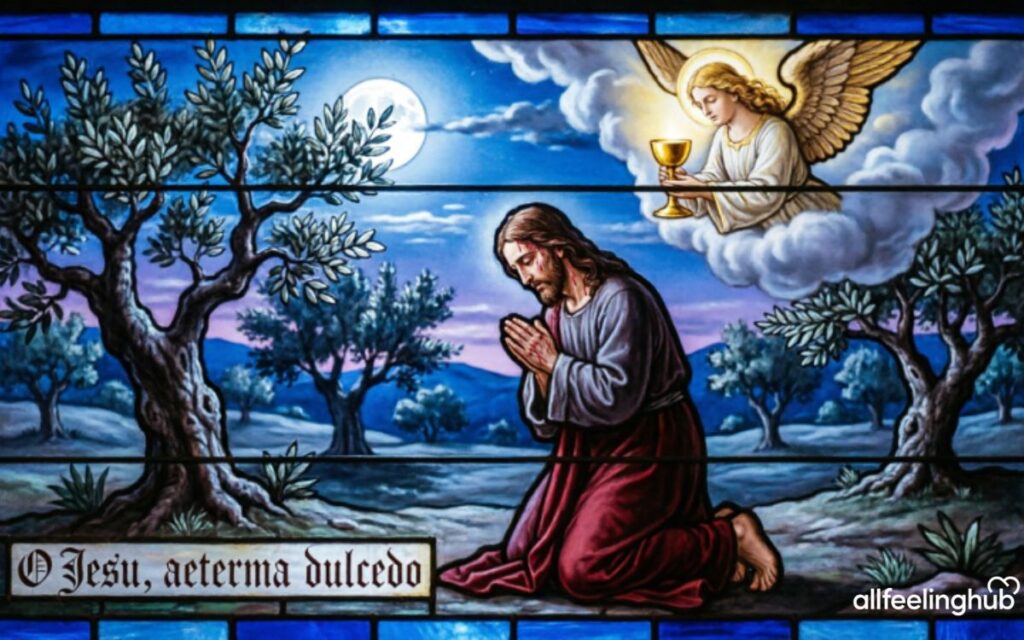
The 12 Year St. Bridget Prayers are a traditional Catholic devotion consisting of seven short prayers, each honoring one of the seven times Jesus Christ shed His Precious Blood during His life and Passion — from His Circumcision to the piercing of His side on the Cross. According to Catholic tradition, these prayers were revealed to St. Bridget of Sweden, a 14th-century mystic, and are meant to be prayed daily, without interruption, for a full twelve years.
This devotion is distinct from — and often confused with — St. Bridget’s better-known Fifteen Prayers, a one-year devotion focused on the number of blows Christ suffered during His Passion. Both devotions come from the same mystical tradition surrounding St. Bridget, but they are separate practices with separate structures, separate promises, and separate histories.
The 12-Year Prayers are sometimes called the “7 Prayers of St. Bridget” because each day’s devotion consists of the same seven short prayers, each preceded by one Our Father and one Hail Mary — roughly seven to ten minutes of prayer per day, repeated faithfully for over a decade.
Who Was Saint Bridget of Sweden?
St. Bridget of Sweden (also spelled Birgitta) was born in 1303 into Swedish nobility and died in 1373. She married young, raised eight children — one of whom, St. Catherine of Sweden, is also venerated as a saint — and served for a time in the royal court of King Magnus II before her husband’s death led her into a life of deeper prayer, penance, and pilgrimage.
From childhood, Bridget reported visions of Christ, and after she was widowed she devoted herself almost entirely to prayer and mystical experience, particularly meditation on Christ’s Passion. She founded the Bridgettine Order (the Order of the Most Holy Savior) and eventually settled in Rome, where she lived out her final years working for Church reform and caring for the poor. She died in Rome in 1373 and was canonized by Pope Boniface IX in 1391 — remarkably quickly for the era. She is honored today as one of the patron saints of Europe.
Her writings, known as the Revelations, record hundreds of visions, many centered on the sufferings of Christ. The 12-Year Prayers and the Fifteen Prayers both emerged from this same devotional tradition, though their exact origins and the authenticity of their attached promises have been debated by Church authorities for centuries.
How to Pray the 12 Year St. Bridget Prayers
- Set aside a consistent time each day. Many people pray them in the morning or evening so the habit doesn’t get lost in a busy schedule.
- Begin with the opening prayer, which offers the seven recitations of the Our Father in union with Christ’s own heart.
- Pray each of the seven prayers in order, preceding each one with one Our Father and one Hail Mary, as instructed in the traditional text.
- Reflect briefly on the specific moment of Christ’s Passion each prayer honors — the Circumcision, the Agony in the Garden, the Scourging, the Crowning with Thorns, the Carrying of the Cross, the Crucifixion, and the Piercing of His Side.
- Repeat this same set of seven prayers every day, without substitution, for twelve consecutive years.
- Keep a simple record — a journal, a calendar, or an app — to track your progress across such a long devotion.
Full Text of the St. Bridget 7 Prayers
O Jesus, now I wish to pray the Lord’s Prayer seven times in unity with the love with which You sanctified this prayer in Your Heart. Take it from my lips into Your Divine Heart. Improve and complete it so much that it brings as much honor and joy to the Trinity as You granted it on earth with this prayer. May these prayers pour upon Your Holy Humanity in glorification of Your Painful Wounds and the Precious Blood that You spilled from them.
First Prayer — The Circumcision Pray one Our Father, one Hail Mary, then: Eternal Father, through Mary’s unblemished hands and the Divine Heart of Jesus, I offer You the first wounds, the first pains, and the first Bloodshed of Your Son, as atonement for my sins and the sins of all humanity’s youth, and as protection against the first mortal sin, especially among my relatives. Amen.
Second Prayer — The Agony on the Mount of Olives Pray one Our Father, one Hail Mary, then: Eternal Father, through Mary’s unblemished hands and the Divine Heart of Jesus, I offer You the terrifying suffering of Jesus’ Heart on the Mount of Olives and every drop of His bloody sweat, as atonement for the sins of the heart of myself and all humanity, as protection against such sins, and for the spreading of divine and brotherly love. Amen.
Third Prayer — The Scourging Pray one Our Father, one Hail Mary, then: Eternal Father, through Mary’s unblemished hands and the Divine Heart of Jesus, I offer You the many thousands of wounds, the terrible pain, and the Precious Blood of the Scourging, as atonement for sins of the flesh committed by myself and all humanity, as protection against such sins, and for the preservation of innocence, especially among my relatives. Amen.
Fourth Prayer — The Crowning with Thorns Pray one Our Father, one Hail Mary, then: Eternal Father, through Mary’s unblemished hands and the Divine Heart of Jesus, I offer You the wounds, the pain, and the Precious Blood of Jesus’ Holy Head from the Crowning with Thorns, as atonement for sins of the spirit committed by myself and all humanity, as protection against such sins, and for the spreading of Christ’s kingdom on earth. Amen.
Fifth Prayer — The Carrying of the Cross Pray one Our Father, one Hail Mary, then: Eternal Father, through Mary’s unblemished hands and the Divine Heart of Jesus, I offer You the sufferings of the way of the Cross, especially the wound on His shoulder and its Precious Blood, as atonement for rebellion against the Cross, complaint against Your holy plan, and sins of the tongue committed by myself and all humanity, as protection against such sins, and for a true love of the Cross. Amen.
Sixth Prayer — The Crucifixion Pray one Our Father, one Hail Mary, then: Eternal Father, through Mary’s unblemished hands and the Divine Heart of Jesus, I offer You Your Son upon the Cross, His nailing and raising, His wounds in His Hands and Feet, and the three streams of His Precious Blood that poured forth from them for us; His extreme torment of body and soul; His precious death and its unbloody renewal in every Holy Mass on earth — as reparation for sins against sacred vows, for my sins and the sins of the whole world, for the sick and dying, for all holy priests and laypeople, for the intentions of the Holy Father, for the restoration of Christian families, for the strengthening of faith, and for unity among all nations in Christ and His Church. Amen.
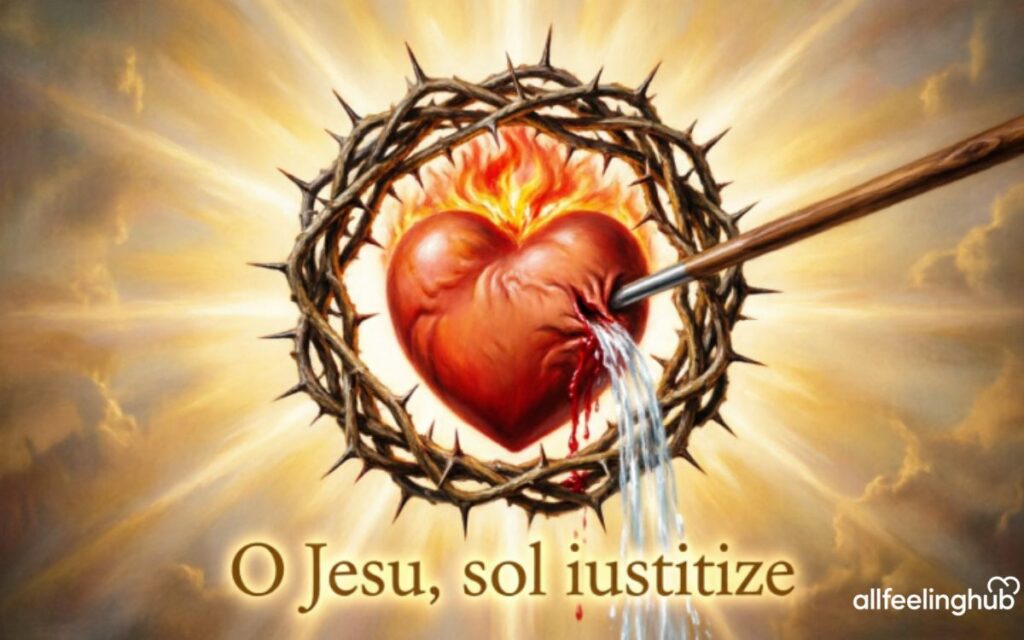
Seventh Prayer — The Piercing of Jesus’ Side Pray one Our Father, one Hail Mary, then: Eternal Father, accept as worthy — for the needs of Holy Church and as atonement for the sins of all mankind — the Precious Blood and Water which poured forth from the wound of Jesus’ Divine Heart. Be gracious and merciful toward us. Blood of Christ, the last precious content of His Holy Heart, wash me of all my guilt and the guilt of others. Water from the side of Christ, wash me clean of all punishment due to sin, and extinguish the flames of Purgatory for me and for all the Poor Souls. Amen.
Promises Associated With the 12 Year St. Bridget Prayers
Devotional literature attributes five extraordinary promises to those who faithfully complete this devotion for twelve full years:
- The soul who prays them will suffer no Purgatory.
- The soul who prays them will be accepted among the Martyrs, as though having shed their own blood for the faith.
- The soul who prays them may choose three other people whom Jesus will then keep in a state of grace sufficient to attain holiness.
- No one among four successive generations of the soul who prays them will be lost.
- The soul who prays them will be made conscious of their coming death one month in advance.
Traditional devotional sources also add that if a person dies before completing the full twelve years, the prayers are still considered fulfilled, provided the sincere intention to finish them was present — and that missed days can simply be made up as soon as possible, without breaking the devotion.
It’s worth being clear-eyed about these promises before making a twelve-year commitment based on them; see the next two sections for important context on their status.
Is the 12 Year St. Bridget Prayer Approved by the Catholic Church?
The answer is nuanced, and it’s worth separating two different things: the prayers themselves, and the promises attached to them.
For St. Bridget’s better-known Fifteen Prayers, the prayers themselves were formally recognized by <cite index=”12-1″>Pope Pius IX, who pronounced them true and for the good of souls on May 31, 1862</cite>. However, <cite index=”12-1,18-1″>only the prayers received this approval — the promises attached to them have never been given Church approval</cite>. In fact, <cite index=”15-1″>in 1954 the Holy Office issued a formal warning cautioning local bishops against permitting the publication or reprinting of pamphlets containing these promises</cite>, <cite index=”19-1″>because their supernatural origin could not be verified</cite>.
The 12-Year, 7-Prayer devotion has a murkier documented history. Many devotional websites state that it was <cite index=”21-1″>recommended by the Sacred Congregation for the Propagation of the Faith and by Pope Clement XII</cite>, and some add that <cite index=”24-1″>Pope Innocent X confirmed the revelation as coming from Our Lord</cite>. These claims are widely repeated across Catholic devotional sites, but they are difficult to verify against any primary Vatican document, and no entry for this devotion appears in the Church’s official Handbook of Indulgences.
In short: praying either devotion is a legitimate and long-standing form of private Catholic devotion, focused on meditating on Christ’s Passion — something the Church has always encouraged. But the specific promises (no Purgatory, protection of four generations, and so on) fall into the category of private revelation with unverified promises, which Catholics are free to find meaningful but are not obligated, and arguably not encouraged, to treat as guaranteed.
What Happens If You Miss a Day?
Traditional sources on this devotion are reassuring on this point: <cite index=”21-1″>if a day or a few days are missed for a valid reason, they can be made up later</cite>, without needing to restart the entire twelve-year commitment. The spirit of the devotion has always been understood as one of sincere, sustained intention rather than legal precision — a missed day due to illness, travel, or simple forgetfulness doesn’t undo years of faithful prayer.
Should death occur before the twelve years are completed, <cite index=”21-1″>the Lord is said to accept the prayers as fully completed, because the genuine intention to finish them was present</cite>. Practically speaking, most people who take up this devotion keep a simple log or use a habit-tracking app so an occasional missed day doesn’t turn into weeks of uncertainty about where they left off.
Benefits of Praying the 12 Year St. Bridget Prayers Daily
- A daily anchor point. A short, structured devotion gives your day a consistent moment of prayer that doesn’t depend on mood or motivation.
- Deepened meditation on the Passion. Walking through the same seven moments of Christ’s suffering, day after day for years, tends to move understanding from head knowledge into something felt and lived.
- Spiritual endurance. Committing to something for twelve years builds a kind of perseverance that shorter devotions can’t teach — patience with God’s timing becomes part of the practice itself.
- Intercessory focus. The prayers explicitly include petitions for others — family, priests, the dying, the Church — making it a devotion that reaches beyond personal benefit.
- A tangible connection to Church history. Praying words handed down through nearly seven centuries of Catholic tradition connects the person praying to a much longer story of faith.
- A framework for offering suffering meaningfully. Many who pray this devotion find it helps them unite their own hardships with Christ’s, giving personal suffering a sense of purpose.
Tips for Staying Faithful to a 12-Year Prayer Commitment
- Anchor it to an existing habit — right after morning coffee, right before bed, or alongside another daily prayer you already keep.
- Keep a simple tracker. A paper calendar with a checkmark each day, or a habit-tracking app, removes the guesswork about whether you’ve missed a day.
- Write the prayers somewhere accessible — a laminated card, a phone note, or a small prayer book you keep with you.
- Don’t treat a missed day as a failure. Make it up as soon as you remember and continue on, rather than abandoning the devotion out of discouragement.
- Revisit your intention periodically. Every few months, remind yourself why you started — whose souls you’re praying for, what grace you’re seeking.
- Find or start accountability. Some parishes and prayer groups pray this devotion together; even a single prayer partner can help sustain a twelve-year commitment.
- Expect dry spells. Like any long devotion, there will be seasons where it feels routine rather than moving. Persisting through those seasons is part of the practice.
When Should You Start the 12-Year St. Bridget Prayers?
There’s no prescribed date or liturgical season required to begin this devotion — unlike some Church-sanctioned novenas or indulgenced prayers with specific start windows, the 12-Year Prayers can be started on any day of the year. That said, many people choose a date with personal or spiritual significance: a birthday, a feast day (St. Bridget’s feast is celebrated on July 23), the start of Lent, or January 1st, simply because a fixed, memorable starting point makes it easier to track the twelve-year span and mark its eventual completion.
The more important consideration than timing is readiness: because this is a long-term commitment, it’s worth beginning only when you’re prepared to build it into your daily routine for the years ahead, rather than starting impulsively and abandoning it within weeks.
Can the 12-Year St. Bridget Prayers Be Prayed at Any Time?
Yes. Unlike prayers tied to specific liturgical hours or Mass times, the 12-Year Prayers have no required time of day. Most devotees choose a consistent daily slot simply for the sake of habit — morning prayer time, a lunch break, or before bed are all common choices. What matters, according to the tradition surrounding this devotion, is daily consistency over the full twelve years rather than any particular hour of the day.
They can also be prayed anywhere — at home, during a commute, in a church before the Blessed Sacrament, or silently during a quiet moment at work — since the devotion requires no special setting, only the words themselves and a sincere heart.
Are the Promises of the St. Bridget Prayers Biblical?
This is worth answering honestly rather than devotionally. The prayers themselves are steeped in Scripture — they walk through the actual events of Christ’s Passion as recorded in the Gospels, and their language of atonement, intercession, and offering reflects biblical themes found throughout the New Testament.
The five specific promises, however — such as being exempted from Purgatory entirely, or guaranteeing the salvation of four generations of descendants — do not have a direct scriptural basis. Catholic teaching on salvation generally emphasizes ongoing cooperation with grace, the possibility of falling from grace, and the mystery of God’s judgment, rather than promises that particular prayers mechanically secure a specific outcome for oneself or one’s descendants. This is part of why, as noted earlier, the promises (as distinct from the prayers) have never received Church approval.
None of this means the devotion lacks value. Meditating daily on Christ’s Passion, praying for one’s family, and offering intercession for the dying are all deeply biblical practices — they just don’t require the specific promises to be true in order to be spiritually meaningful.
Spiritual Meaning of the 12-Year St. Bridget Devotion
At its core, this devotion is an extended act of remembrance and offering. Each of the seven prayers takes a moment of Christ’s suffering — moments that Scripture records but often only briefly — and asks the person praying to sit with it, name it, and offer it back to God on behalf of themselves and others.
The twelve-year length transforms what could be a single act of devotion into a sustained spiritual discipline. Much like a long pilgrimage, the value isn’t only in the destination (the completion of the twelfth year) but in the daily faithfulness the journey requires. Over more than a decade, life will bring seasons of joy, grief, doubt, and busyness — and the prayers remain constant through all of them, becoming less about the specific words and more about the discipline of showing up daily in prayer regardless of circumstance.
The Meaning Behind the 15 Prayers of St. Bridget
Though this guide focuses on the 12-Year, 7-Prayer devotion, it’s worth understanding its better-known counterpart, since the two are frequently confused. According to tradition, Christ appeared to St. Bridget and revealed that <cite index=”10-1,22-1″>He had received 5,480 blows during His Passion</cite>, and taught her fifteen prayers — one Our Father and one Hail Mary before each — to be recited daily for one full year in honor of those wounds. Praying the fifteen prayers daily for 365 days roughly corresponds to that number of blows, giving the devotion its internal logic.
Unlike the 12-Year devotion’s focus on the seven bloodsheddings, the Fifteen Prayers move through the entire arc of the Passion in a single meditative sequence — from the Last Supper and the Agony in the Garden through the trial, scourging, crucifixion, and death. It is generally considered the more historically documented and Church-recognized of St. Bridget’s Passion devotions, since the prayers (though not their promises) received formal papal approval in 1862.
Why the Number 12 Matters in the St. Bridget Devotion
Unlike the Fifteen Prayers, whose one-year, fifteen-prayer structure is tied directly to the specific number of blows Christ is said to have received, the traditional sources behind the 12-Year devotion don’t offer an explicit explanation for why twelve years was chosen as the length of the commitment. What can be said is that the number twelve carries deep resonance throughout Scripture and Catholic tradition more broadly — the twelve tribes of Israel, the twelve apostles, the twelve fruits of the Holy Spirit, and the twelve stars in the crown described in Revelation 12:1.
Within the devotion itself, many who practice it understand the twelve years less as a number with a fixed symbolic key and more as a deliberately long span — long enough to require real perseverance, long enough to span different seasons of a person’s life, and long enough to transform a prayer from a one-time act into a lived discipline of faithfulness.
The Five Wounds of Christ in St. Bridget’s Prayers
The Five Sacred Wounds — the wounds to Christ’s hands, feet, and side, inflicted during the Crucifixion — are a distinct and much older devotion in Catholic tradition, associated especially with Franciscan spirituality and St. Francis of Assisi’s own stigmata. St. Bridget’s prayers overlap with this devotion without being identical to it.
In the 12-Year devotion’s Sixth Prayer, the wounds to Christ’s Hands and Feet are explicitly named, along with the “three streams” of blood that poured from them. The Seventh Prayer focuses specifically on the wound to His side and the blood and water that flowed from His Sacred Heart. So while the 12-Year devotion is structured around seven bloodsheddings rather than five wounds specifically, the culminating prayers of the sequence bring the devotee directly to meditate on the Five Wounds tradition, uniting the two forms of Passion devotion in their final movement.
St. Bridget’s Devotion to the Passion of Christ
Devotion to Christ’s Passion was the defining thread of St. Bridget’s spiritual life. From childhood visions of the crucified Christ to the mystical revelations she recorded as an adult, her spirituality returned again and again to a desire to understand — and to help others understand — the full extent of Christ’s suffering.
This wasn’t detached theological interest; it was deeply personal. Bridget’s own life included profound loss, including the death of her husband and, later, her son. Her meditations on Christ’s wounds are often understood by scholars of her writings as having been shaped by this lived experience of grief, giving her Passion devotions an emotional intensity that has kept them in circulation for nearly 700 years.
How to Begin the Devotion With Faith and Intention
- Start with why. Before beginning, take time to name your intention — a person you’re praying for, a grace you’re seeking, or simply a desire to grow closer to Christ’s Passion.
- Don’t wait for a “perfect” moment. Any day is a valid day to begin; waiting for ideal circumstances often delays devotions indefinitely.
- Read through all seven prayers first, slowly, before starting the daily practice, so the language feels familiar rather than foreign on day one.
- Consider going to Confession before beginning, if it’s been a while, as a way of starting the devotion with a clear conscience.
- Tell someone you trust. Sharing your commitment with a spouse, friend, or spiritual director creates a small measure of accountability for the years ahead.
- Begin simply. The first day doesn’t need to feel profound — consistency matters far more than how “spiritual” any single day feels.
Creating a Prayer Routine for the 12-Year Devotion
- Pick a fixed time slot rather than “whenever I have a free moment” — fixed times are far more sustainable over a decade than flexible ones.
- Pair it with an existing ritual, like morning coffee, a commute, or bedtime, so the prayer rides along with something you already do daily.
- Keep the text within reach — a bookmark, a laminated card, or a saved note on your phone — so there’s no friction to starting each day.
- Set a recurring reminder on your phone for the first few months, until the habit is fully automatic.
- Build in a monthly check-in with yourself to review how the routine is going and adjust the timing if it isn’t sticking.
- Plan for travel and disruption in advance — know how you’ll keep the devotion going when your normal routine is interrupted.
Can the St. Bridget Prayers Be Prayed for a Special Intention?
Yes. While the traditional promises attached to the devotion focus on personal salvation and the souls of one’s own family, there is nothing in Catholic tradition preventing someone from offering this devotion — or any prayer — for a specific special intention: a loved one’s healing, a family member’s return to faith, a difficult decision, or the resolution of a hardship.
Many people begin the twelve-year commitment specifically to intercede for someone else, choosing to offer each day’s prayers explicitly for that person’s spiritual or physical wellbeing. Naming the intention clearly at the start — and returning to it periodically over the years — tends to keep the devotion feeling purposeful even during long stretches when it might otherwise feel routine.
What to Expect During the 12 Years of Prayer
The honest answer is: ordinary life, prayed through. Most days will feel unremarkable — a few minutes of familiar words recited quietly. Over twelve years, you should expect seasons of real spiritual consolation alongside long stretches where the prayers feel dry, repetitive, or easy to forget. This is typical of any sustained devotional practice and isn’t a sign of failure.
You can also expect the devotion to quietly absorb whatever is happening in your life — the prayers for “the sick and dying” or “the restoration of Christian families” will take on new meaning during seasons of illness, family strain, or loss, even though the words themselves never change. Many people who complete long devotions like this one describe looking back at the start of year one from the vantage point of year twelve and barely recognizing how much of their life happened alongside those quiet, repeated prayers.
How the Devotion Can Deepen Your Prayer Life
A twelve-year daily devotion has a way of teaching lessons that shorter prayers rarely can. It builds the discipline of showing up in prayer even when there’s no particular feeling driving you to it — which, for many people of faith, becomes one of the most valuable spiritual habits they develop. It also creates a long, continuous thread of intercession, meaning the people and intentions you’re praying for are held in prayer not just once, but daily, for over a decade.
Beyond the specific content of these seven prayers, the practice of sustained, structured devotion tends to spill over into the rest of a person’s prayer life — making other daily prayers, like the Rosary or morning offering, feel more natural and less like separate obligations. For many who take up this devotion, the greatest gift isn’t found in the five promised graces, but in who they become through twelve years of quiet, faithful repetition.
Frequently Asked Questions
What Are the 12-Year St. Bridget Prayers?
The 12-Year St. Bridget Prayers are a Catholic devotion traditionally attributed to St. Bridget of Sweden and prayed daily for twelve years.
What Is the Origin of the 12-Year St. Bridget Prayers?
The devotion is traditionally connected with St. Bridget of Sweden and focuses on meditating on Christ’s Passion and suffering.
How Do You Pray the 12-Year St. Bridget Prayers?
The devotion traditionally involves praying a set of prayers each day for twelve years while reflecting on the Passion of Jesus.
What Are the Promises of the 12-Year St. Bridget Devotion?
Traditional accounts associate the devotion with spiritual promises, but Catholics should treat these as devotional traditions rather than guaranteed outcomes from God.
How Long Do You Pray the St. Bridget Prayers?
The traditional devotion is practiced daily for twelve years, making consistency and sincere prayer central to the practice.
What Prayers Are Included in the 12-Year St. Bridget Devotion?
The devotion includes prayers focused on Christ’s Passion, His wounds, suffering, and the salvation of souls.
Can Anyone Pray the 12-Year St. Bridget Prayers?
Yes, anyone who wishes to practice this Catholic devotion can pray them with sincere faith and reflection.
What Is the Purpose of the 12-Year St. Bridget Prayers?
The purpose is to deepen devotion to Christ, meditate on His Passion, grow in faith, and seek God’s grace.
Can I Start the 12-Year St. Bridget Prayers at Any Time?
Yes, you can begin the devotion at any time, although maintaining a consistent daily prayer practice is traditionally emphasized.
Why Are the 12-Year St. Bridget Prayers Important to Catholics?
They are valued as a traditional devotional practice that encourages meditation on Christ’s suffering, prayer, repentance, and spiritual growth.
Conclusion
The 12-Year St. Bridget Prayers are a longstanding Catholic devotion centered on meditating on the Passion of Jesus and seeking spiritual growth through faithful prayer. Traditionally associated with St. Bridget of Sweden, this devotion encourages perseverance, reflection, repentance, and a deeper relationship with Christ. For those who practice it, the prayers can provide a meaningful daily opportunity to reflect on Christ’s suffering and God’s mercy.
Ultimately, the value of the devotion lies in sincere faith, prayerful reflection, and a desire to grow closer to God. Those interested in the 12-Year St. Bridget devotion should approach it with patience and devotion rather than simply focusing on promised benefits. May this prayer tradition inspire greater faith, compassion, gratitude, and trust in God’s mercy throughout each year of the journey.

David is a passionate writer with 4 years of experience creating heartfelt prayers, blessings, and inspirational messages. At https://allfeelinghub.com/ , he shares faith-filled content designed to inspire hope, strengthen spirituality, and bring comfort, peace, and encouragement to readers worldwide.