

The death of Samuel is an important moment in the biblical story of Israel. How Did Samuel Die in the Bible is a question many readers ask because Scripture provides a clear account of his death but does not describe the exact cause. Samuel was a respected prophet, judge, and spiritual leader who played a significant role in guiding Israel and anointing both Saul and David.
In this guide, you’ll discover what the Bible says about Samuel’s death, where he was buried, and what happened in Israel after his passing. You’ll also explore Samuel’s final role in the biblical narrative and the spiritual lessons his life and death can teach about faithfulness, obedience, leadership, and serving God.
How Did Samuel Die in the Bible?
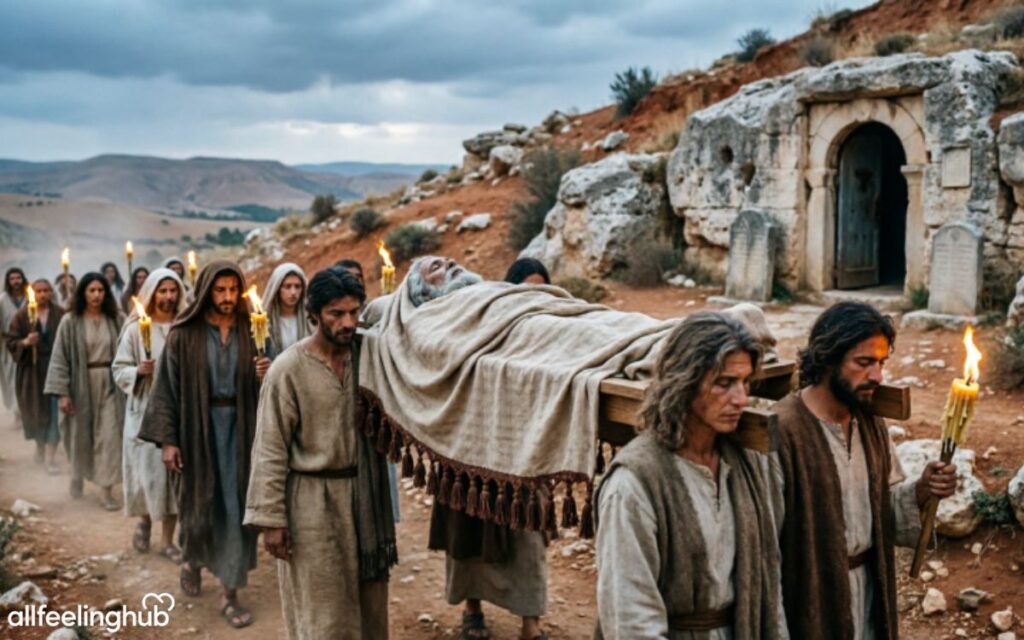
The Bible doesn’t describe a violent or unusual death for Samuel — he died of natural causes, most likely from old age, after a long life as Israel’s last judge and one of its greatest prophets.
Scripture simply states, “And Samuel died,” without describing an illness, injury, or specific cause. His death is recorded briefly in 1 Samuel 25:1, immediately followed by the note that all Israel gathered to mourn him and buried him at his home in Ramah.
Where Is Samuel’s Death Mentioned in the Bible?
Samuel’s death is recorded in 1 Samuel 25:1: “And Samuel died; and all the Israelites were gathered together, and lamented him, and buried him in his house at Ramah.” It’s referenced again later in 1 Samuel 28:3, which recaps his death and burial as context for the account of Saul and the witch of Endor: “Now Samuel was dead, and all Israel had lamented him, and buried him in Ramah, even in his own city.”
What Happened Before Samuel Died?
In the chapters leading up to his death, Samuel had already anointed both Saul and David as kings of Israel, publicly rebuked Saul for his disobedience regarding the Amalekites (1 Samuel 15), and lived out his final years as a respected elder statesman and prophet even as Saul’s kingship unraveled and David fled as a fugitive.
By the time of his death, Samuel had largely stepped back from active national leadership, though his earlier anointing of David remained the unspoken reality hanging over Saul’s increasingly troubled reign.
How Old Was Samuel When He Died?
The Bible does not state Samuel’s exact age at death. Scripture traces his life from childhood — dedicated to the Lord’s service under the priest Eli (1 Samuel 1-3) — through decades as judge and prophet over Israel, but no verse gives a specific number of years.
Based on the broader biblical timeline, most scholars estimate he lived to an old age, likely into his eighties or beyond, though this remains an inference rather than a stated fact.
Where Was Samuel Buried?
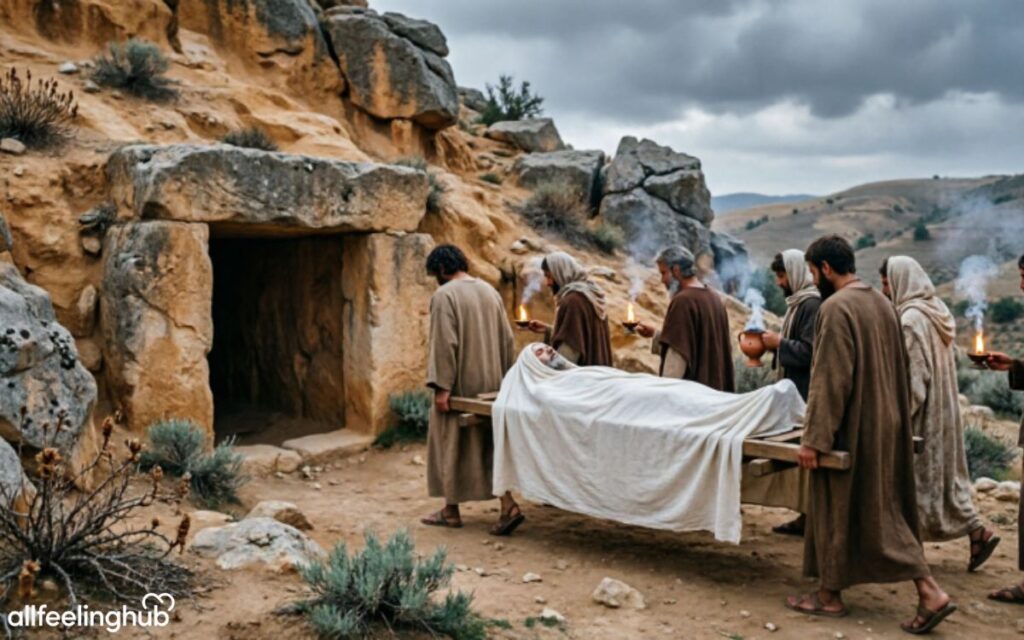
Samuel was buried “in his house at Ramah” (1 Samuel 25:1), his hometown and the place where he had lived, judged Israel, and built an altar to the Lord (1 Samuel 7:17). Ramah was located in the territory of Benjamin, a few miles north of Jerusalem, and remained closely associated with Samuel throughout his life — it’s where his father Elkanah and mother Hannah lived, and where Samuel returned regularly during his years as judge (1 Samuel 7:17).
What Does the Bible Say About Samuel’s Death?
Scripture treats Samuel’s death with striking brevity given his importance: a single verse announces it, followed immediately by the note that all Israel mourned him.
There is no lengthy eulogy, no detailed deathbed scene, and no description of his final words — a notable contrast to figures like Jacob, Moses, or David, whose deaths receive much fuller narrative treatment elsewhere in Scripture.
Samuel’s Final Years as a Prophet
By his final years, Samuel had transitioned from Israel’s active political and military leader — the role he held as the last of the judges — into an elder prophet whose primary remaining function was spiritual guidance and, on at least one occasion, anointing Israel’s next king.
He appears to have lived at Ramah during this period, having largely handed off governance to King Saul, though his moral authority as a prophet of God remained intact even after his formal leadership had ended.
Samuel’s Role in Israel Before His Death
Samuel served as Israel’s last judge, a prophet who anointed both of Israel’s first two kings, and the figure who transitioned the nation from the era of judges into the era of monarchy.
He judged Israel from Ramah, traveling a regular judicial circuit (1 Samuel 7:15-17), confronted Saul’s disobedience directly, and privately anointed David as king years before David would actually take the throne. His death effectively closed out an era of Israelite leadership that stretched back to the time of Eli.
Why Samuel’s Death Was Significant
Samuel’s death marked the loss of the last major link to Israel’s era of judges and the final independent prophetic voice who had anointed both reigning and future kings.
With Samuel gone, Saul lost the closest thing he had to a moral check on his kingship, and the narrative that follows shows Saul’s decline accelerating — culminating, later, in his desperate and forbidden attempt to contact Samuel’s spirit through the witch of Endor.
How Did King Saul React to Samuel’s Death?
The text of 1 Samuel doesn’t describe Saul’s personal reaction at the time of Samuel’s death — the verse simply notes that “all the Israelites” mourned him, which would have included Saul.
However, Saul’s later actions reveal how much Samuel’s absence weighed on him: when facing the Philistines without prophetic guidance in 1 Samuel 28, Saul’s desperation to consult Samuel — even through forbidden means — suggests he deeply felt the loss of Samuel’s counsel.
What Did David Do After Samuel Died?

Immediately after the report of Samuel’s death, 1 Samuel 25:1 notes that “David arose, and went down to the wilderness of Paran,” continuing his life as a fugitive from Saul. The very next events in the narrative are David’s encounters with Nabal and Abigail, meaning Samuel’s death occurs as a brief transitional note within David’s ongoing story rather than an event that directly halts or redirects it.
How Did Israel Respond to Samuel’s Death?
Both 1 Samuel 25:1 and 1 Samuel 28:3 emphasize that “all Israel” or “all the Israelites” gathered to lament Samuel — a phrase suggesting a nationwide mourning rather than a private or local funeral.
This widespread response reflects Samuel’s stature as one of the most significant figures in Israel’s history up to that point, comparable in some respects to the national mourning described for Moses and Aaron.
Samuel’s Death and the Nation of Israel
Samuel’s death left Israel in an unusual position: a nation with a reigning king (Saul) whose legitimacy was already fading, a future king (David) already anointed but not yet enthroned, and no prophet of Samuel’s stature immediately stepping into his place.
This vacancy in prophetic leadership becomes especially apparent in the chapters that follow, as Saul’s isolation from divine guidance deepens.
How Did Samuel Die in the Bible?
As noted above, the Bible records Samuel’s death plainly and without detail: “And Samuel died” (1 Samuel 25:1). There’s no account of illness, violence, or extraordinary circumstance — only the fact of his death and the nation’s collective mourning and burial of him at Ramah.
What Does the Bible Say About Samuel’s Death?
Repeating what Scripture states: 1 Samuel 25:1 records his death and burial in a single verse, and 1 Samuel 28:3 later recaps the same information as background context for the witch of Endor narrative. Both references are brief, factual, and free of embellishment.
Did Samuel Die Naturally?
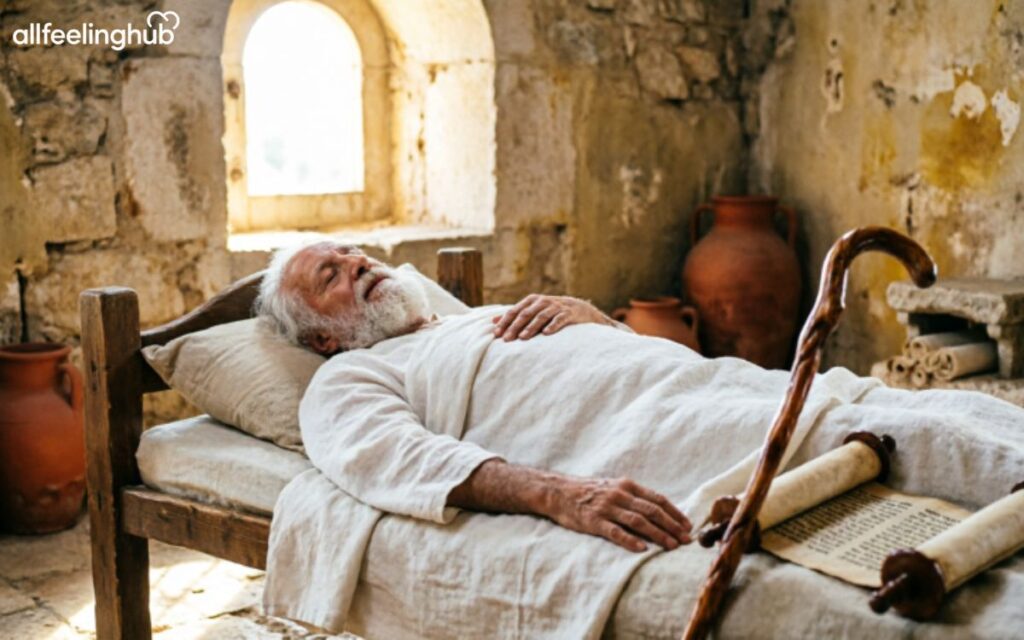
Yes, all available evidence points to a natural death, most likely due to old age. Nothing in the text suggests illness, injury, or foul play — Samuel simply lived a long life as prophet and judge and died as an elderly man, mourned by the nation he had served.
What Happened Before Samuel Died?
As covered earlier, the years before Samuel’s death included his anointing of Saul and later David, his confrontation with Saul over disobedience in the war against the Amalekites, and his general withdrawal from active national leadership as Saul’s reign continued and David’s conflict with Saul intensified.
How Old Was Samuel When He Died?
As noted above, Scripture does not give Samuel’s exact age at death. Any specific number offered by commentators or study Bibles is an estimate based on the broader chronology of his life, not a figure stated directly in the biblical text.
Did Samuel Die Before David Became King?
Yes. Samuel’s death, recorded in 1 Samuel 25:1, occurs while Saul is still reigning and David is still a fugitive living in the wilderness. David would not become king over Judah until after Saul’s death (2 Samuel 2:4) and king over all Israel some years after that (2 Samuel 5:3) — meaning Samuel never lived to see David actually sit on the throne, despite having anointed him years earlier.
Was Samuel Killed or Did He Die Naturally?
Samuel was not killed. The biblical text gives no indication of violence, assassination, or any unnatural cause of death. He died of what appears to be natural causes after a long life, and the entire nation mourned him — a response far more consistent with the death of a beloved elder statesman than with any account of a killing.
Did Samuel Die Before or After Saul?
Samuel died before Saul. Samuel’s death is recorded in 1 Samuel 25, while Saul’s death — by suicide on the battlefield after being critically wounded by the Philistines at Mount Gilboa — doesn’t occur until 1 Samuel 31, several chapters later.
In fact, Samuel’s death is specifically referenced again in 1 Samuel 28:3 as background for the account of Saul consulting the witch of Endor, which itself takes place shortly before Saul’s own death.
Samuel and Saul’s Relationship Before His Death
Samuel and Saul’s relationship had grown deeply strained well before Samuel’s death. Samuel had anointed Saul as Israel’s first king (1 Samuel 10) and initially supported him, but their relationship fractured after Saul’s disobedience — first by offering an unauthorized sacrifice (1 Samuel 13), and more decisively after Saul failed to fully destroy the Amalekites as commanded (1 Samuel 15).
Samuel declared that God had rejected Saul as king, and 1 Samuel 15:35 notes that “Samuel came no more to see Saul until the day of his death,” though he continued to mourn for Saul even amid this rupture.
The Mourning for Samuel in Ramah

Both accounts of Samuel’s death emphasize the scale of mourning: “all the Israelites were gathered together, and lamented him” (1 Samuel 25:1) and “all Israel had lamented him” (1 Samuel 28:3). This mourning centered on Ramah, Samuel’s hometown, where he was buried at his own house — making Ramah both the site of his life’s work as judge and the place of his burial and communal grief.
What Happened in Israel After Samuel Died?
In the immediate narrative, David continued his life as a fugitive, encountering Nabal and Abigail shortly after Samuel’s death is reported. On a national level, Saul’s kingship continued its downward trajectory, marked by increasing paranoia, further pursuit of David, and eventually, desperation severe enough to lead him to consult a medium — something the law of Moses explicitly forbade — in an attempt to reach Samuel’s spirit before his final battle with the Philistines.
Samuel’s Appearance to Saul After Death
In 1 Samuel 28, facing the Philistine army and unable to get guidance from God through normal prophetic or priestly means, Saul sought out a medium — the witch of Endor — and asked her to bring up Samuel. According to the text, a figure identified as Samuel appeared, and Saul recognized and bowed before him.
This figure rebuked Saul for consulting a medium and delivered a grim prophecy: that Saul and his sons would die the next day and Israel would fall to the Philistines (1 Samuel 28:15-19).
The Witch of Endor and Samuel’s Spirit
The account in 1 Samuel 28 has been debated by Bible scholars and theologians for centuries, and different Christian and Jewish traditions have read it differently. Some interpreters take the text at face value — that God permitted Samuel’s actual spirit to appear and deliver a final, genuine prophecy.
Others argue that what appeared was a demonic deception impersonating Samuel, since necromancy was strictly forbidden in the Law (Leviticus 19:31, Deuteronomy 18:10-12), and it seems unlikely God would honor a practice He had condemned. Still others read the account as a literary or symbolic device within the narrative.
Did Samuel Speak to Saul After He Died?
According to the text of 1 Samuel 28, yes — the figure identified as Samuel spoke directly to Saul, rebuking him for disturbing his rest and pronouncing a prophecy of Saul’s imminent death and Israel’s defeat.
Whether this was truly Samuel’s spirit or another explanation, as discussed above, remains a matter of theological interpretation rather than something the text resolves definitively on its own.
Samuel’s Prophetic Legacy
Samuel’s prophetic legacy includes anointing Israel’s first two kings, delivering some of the Old Testament’s clearest teaching on obedience over ritual sacrifice (“to obey is better than sacrifice,” 1 Samuel 15:22), and serving as a bridge figure between the era of judges and the era of the monarchy.
He is remembered in later Scripture alongside figures like Moses as an example of powerful intercessory prayer (Jeremiah 15:1, Psalm 99:6), a testament to how significant his prophetic reputation remained long after his death.
Lessons From the Life and Death of Samuel
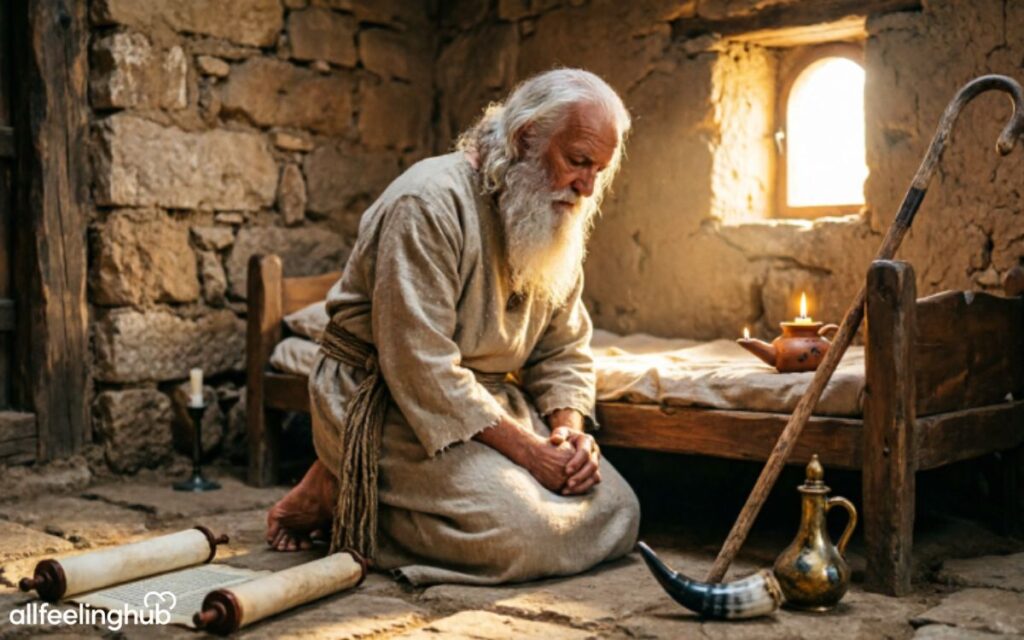
Samuel’s life offers several enduring lessons: the value of a life dedicated to God from childhood, the courage required to deliver hard truths to those in power (as he did with Saul), and the importance of faithful, consistent service over decades rather than dramatic, singular acts.
His quiet, natural death — mourned nationally but undramatic in its telling — also reflects a broader biblical pattern where faithful service, not a dramatic ending, defines a person’s legacy.
Samuel’s Faith and Obedience to God
From childhood, when he responded to God’s call with “Speak, LORD; for thy servant heareth” (1 Samuel 3:9-10), Samuel’s life is marked by consistent obedience to God, even when it meant delivering unwelcome messages to those in power — including his blunt rebuke of King Saul.
His statement to Saul in 1 Samuel 15:22 — “Behold, to obey is better than sacrifice” — has become one of Scripture’s most quoted statements on the priority of genuine obedience over outward religious ritual.
Bible Verses About Samuel’s Death
- 1 Samuel 25:1 – “And Samuel died; and all the Israelites were gathered together, and lamented him, and buried him in his house at Ramah. And David arose, and went down to the wilderness of Paran.”
- 1 Samuel 28:3 – “Now Samuel was dead, and all Israel had lamented him, and buried him in Ramah, even in his own city.”
- 1 Samuel 15:35 – “And Samuel came no more to see Saul until the day of his death: nevertheless Samuel mourned for Saul: and the LORD repented that he had made Saul king over Israel.”
- 1 Samuel 28:15 – “And Samuel said to Saul, Why hast thou disquieted me, to bring me up?…”
Samuel’s Death in 1 Samuel 25
Samuel’s death appears in the opening verse of 1 Samuel 25, functioning almost as a narrative hinge — closing out his direct involvement in the story before the chapter moves immediately into the account of David, Nabal, and Abigail.
Its placement at the very start of the chapter, rather than as part of a larger narrative about Samuel himself, underscores how briefly and simply the text treats even the death of one of Israel’s most significant figures.
The Spiritual Meaning of Samuel’s Death
For many readers, Samuel’s death represents the quiet close of a faithful life — a reminder that consistent, lifelong obedience to God doesn’t always end with a dramatic final scene, but can still leave behind a legacy significant enough to move an entire nation to mourning.
His death also marks a spiritual turning point in the broader narrative: with Samuel gone, Saul is left without the prophetic guidance that had once anchored his reign, setting the stage for the kingdom’s transition toward David and underscoring how much Israel had depended on Samuel’s presence, even in his quiet final years.
Frequently Asked questions
How Did Samuel Die in the Bible?
Samuel died peacefully after serving as a prophet and judge of Israel, and the Bible does not describe a specific cause of death.
Where Does the Bible Describe Samuel’s Death?
Samuel’s death is recorded in 1 Samuel 25:1, which says that he died and was mourned by all Israel.
How Old Was Samuel When He Died?
The Bible does not give Samuel’s exact age when he died.
Where Was Samuel Buried?
Samuel was buried at his home in Ramah, where the people of Israel gathered to mourn him.
What Happened After Samuel Died?
After Samuel’s death, David continued his journey through the wilderness, while Saul remained king of Israel.
Was Samuel Killed in Battle?
No, the Bible does not say that Samuel was killed in battle or by another person.
Did Samuel Die Before Saul?
Yes, Samuel died before Saul’s final battle with the Philistines, which is described later in 1 Samuel.
Did Samuel Appear After His Death?
In 1 Samuel 28, Saul consulted the medium at Endor, and Samuel appeared in a supernatural encounter to deliver a message to Saul.
What Was Samuel’s Role Before His Death?
Samuel served as a prophet, judge, and spiritual leader who guided Israel and anointed both Saul and David.
What Can We Learn From Samuel’s Life and Death?
Samuel’s life teaches the importance of faithful service, obedience to God, prayer, and listening to divine guidance.
Conclusion
How Did Samuel Die in the Bible is answered briefly in 1 Samuel 25:1, which states that Samuel died and that all Israel gathered to mourn for him before he was buried at his home in Ramah. The Bible does not describe the specific cause of his death, so it is not possible to say exactly what illness, age-related condition, or other circumstance led to it.
Samuel’s death marked the end of the life of one of Israel’s most important prophets, judges, and spiritual leaders. His story remains significant because of his faithfulness to God, his role in guiding Israel, and his involvement in anointing both Saul and David as kings. Although Scripture gives few details about his final moments, Samuel’s legacy continues throughout the biblical narrative.

David is a passionate writer with 4 years of experience creating heartfelt prayers, blessings, and inspirational messages. At https://allfeelinghub.com/ , he shares faith-filled content designed to inspire hope, strengthen spirituality, and bring comfort, peace, and encouragement to readers worldwide.