

Many people are curious about the Biblical Meaning of William and whether this classic name has a direct connection to Scripture. Although William is not mentioned in the Bible, it has Germanic roots and a traditional meaning associated with protection, determination, and strength.
In this guide, you’ll discover the origin and traditional meaning of William, whether it has Hebrew or biblical roots, and how its qualities can be connected with Christian values. Whether you’re considering William as a baby name or researching its spiritual significance, this article offers a clear and meaningful look at the history, symbolism, and biblical perspective of the name.
What Does the Name William Mean in the Bible?

William has no meaning “in the Bible,” because the name itself never appears there — not in the Old Testament, the New Testament, or any Hebrew, Aramaic, or Greek text underlying them. (cite index=”14-1″>Its documented origin is Germanic, derived from the Old High German name Willahelm, composed of wil (“will” or “desire”) and helm (“helmet” or “protection”), effectively translating to “resolute protector” or “strong-willed warrior.
Is William Mentioned in the Bible?
No. There is no person, place, or word named William anywhere in the Bible, in any translation.
The name developed among Germanic peoples centuries after the biblical texts were completed, making a direct scriptural reference impossible.
Does William Have a Biblical Meaning?
Not literally — but it carries a legitimate thematic connection some Christians draw between its documented meaning (“resolute protector”) and Scripture’s rich teaching on protection, courage, and steadfast will.
That’s a meaningful lens through which to view the name, but it’s worth being clear it’s an interpretation added onto William’s Germanic root, not a meaning drawn from Scripture itself.
The Origin and History of the Name William
(cite index=”17-1″>William is a masculine given name of Germanic origin</cite>, (cite index=”17-1″>ultimately descending, along with its German cognate Wilhelm, from the reconstructed Proto-Germanic *Wiljahelmaz</cite>.
(cite index=”14-1″>It reached England through the Norman French form Willame, introduced by William the Conqueror following the Norman Conquest of 1066</cite>, after which (cite index=”12-1″>it became the most popular given name in England throughout the Middle Ages, until it was eventually supplanted by John</cite>.
William Meaning in Hebrew
William has no Hebrew origin or meaning. Its roots are entirely Germanic, tracing to the Old High German elements wil and helm, and it shares no linguistic connection with the vocabulary of the Hebrew Bible.
William Meaning in Greek
William has no Greek origin either. It doesn’t appear in the Greek New Testament, and no ancient Greek word or name corresponds to it.
Its closest linguistic relatives are entirely Germanic and Latin-French (Guillaume), not Hellenistic.
Is William a Hebrew or Biblical Name?

No, on both counts. William is Germanic in origin, not Hebrew, and it isn’t biblical. It belongs in the same category as many widely loved names used by Christian families today — Charlotte, Amelia, William — that carry real cultural and historical weight without any biblical root at all.
Spiritual Meaning of the Name William
While not biblical by origin, William’s documented meaning — “resolute protector,” combining will/determination with protection — lends itself naturally to spiritual interpretation.
Many Christian parents read this as pointing toward a life of steadfast faith and protective care for others, themes Scripture treats with genuine depth throughout both the Old and New Testaments.
Christian Meaning and Significance of William
Christian parents who choose William often connect its genuine “protector” meaning to biblical teaching on guarding and defending others — from a father’s call to protect his household to the broader biblical picture of God Himself as a protector and refuge (Psalm 91:1-2).
Biblical Symbolism Associated With William
Because “protector” is William’s genuine, documented meaning, the symbolism most naturally associated with it in a Christian context draws from Scripture’s consistent portrayal of God and godly leaders as protectors and shields — from God being called a “shield” throughout the Psalms (Psalm 3:3, 28:7) to Christ’s description of gathering His people “even as a hen gathereth her chickens under her wings” (Matthew 23:37).
What Does William Symbolize Spiritually?
Spiritually, William tends to symbolize steadfast resolve paired with protective strength — someone whose will is disciplined toward guarding and defending rather than self-interest.
This symbolism draws directly on William’s genuine Germanic meaning rather than requiring an invented etymology, giving it a more grounded spiritual resonance than many popular “biblical name meaning” pairings built on inaccurate claims.
Bible Verses That Reflect William’s Meaning
These verses don’t mention William, but reflect the biblical themes of protection, strength, and resolute will often associated with the name:
- Psalm 91:1-2 – “He that dwelleth in the secret place of the most High shall abide under the shadow of the Almighty…my God; in him will I trust.”
- Psalm 28:7 – “The LORD is my strength and my shield; my heart trusted in him, and I am helped…”
- Joshua 1:9 – “Have not I commanded thee? Be strong and of a good courage…for the LORD thy God is with thee whithersoever thou goest.”
- Ephesians 6:16 – “Above all, taking the shield of faith, wherewith ye shall be able to quench all the fiery darts of the wicked.”
- 1 Corinthians 16:13 – “Watch ye, stand fast in the faith, quit you like men, be strong.”
- Proverbs 18:10 – “The name of the LORD is a strong tower: the righteous runneth into it, and is safe.”
Biblical Qualities Associated With the Name William
Given its genuine meaning, William is commonly associated with qualities Scripture consistently honors: courage, protective strength, steadfast resolve, and leadership grounded in service to others rather than self-interest.
These qualities are drawn from the Bible’s broader teaching on strength and protection, applied intentionally to a name whose actual etymology supports the connection more directly than many other popular “biblical name meaning” pairings.
William and the Meaning of Protection

Protection is a recurring and significant theme throughout Scripture, from God’s repeated description as a “shield” and “refuge” in the Psalms to Jesus’ own protective imagery over Jerusalem in Matthew 23:37.
William’s root meaning — a “helmet” or protective covering, joined with resolute will — pairs naturally with this theme, offering Christian parents a name that can serve as an ongoing reminder of both God’s protection and a call to protect others faithfully.
William as a Symbol of Strength and Courage
Beyond protection specifically, William’s root sense of resolute will lends itself to broader associations with strength and courage — qualities Scripture calls for repeatedly, as in God’s repeated charge to Joshua to “be strong and of a good courage” (Joshua 1:6-9).
While William isn’t tied to any specific biblical figure, its meaning resonates naturally with this kind of courageous, steady faith.
William and the Virtue of Determination
Determination — the “will” half of William’s meaning — is treated throughout Scripture as essential to a life of faith, from Paul’s description of “pressing toward the mark” (Philippians 3:14) to the persistent widow’s example of steadfast pursuit in Luke 18:1-8.
William’s documented meaning aligns closely with this virtue, giving the name a genuine, rather than merely thematic, connection to values Scripture explicitly commends.
William and Christian Faith
William carries no built-in doctrinal content, but its genuine meaning — resolute protection — sits comfortably alongside core Christian teaching on courage, guardianship, and faithful strength, making it a name many Christian families find easy to fill with real spiritual significance.
Is William Considered a Christian Name?
Not historically in origin — William is a secular Germanic name, with no tie to a specific biblical figure, saint, or Christian tradition at its root. Like many Western names, it has nonetheless been used comfortably by Christian families for nearly a millennium, becoming one of the most enduring names in Christian Europe simply through its long, widespread cultural use.
Can William Have Spiritual Meaning Without Being Biblical?
Yes. A name doesn’t need to appear in Scripture to carry spiritual weight for a family — that meaning can come from the values a family intentionally connects to a name and the way it’s lived out over a lifetime.
William is a strong example of this, since its actual documented meaning (resolute protection) already aligns naturally with values Scripture praises, even without any direct biblical origin.
William in Christian History and Tradition

William doesn’t have a distinct place in formal Christian tradition tied to a specific biblical figure, though several Christian saints have borne the name — including Saint William of York and Saint William of Rochester — giving it a modest presence within the Church’s calendar of commemorated figures.
Its far larger legacy within Christian history, however, comes through the many kings, church leaders, and prominent Christian laypeople who have carried the name across nearly a thousand years of European history.
William in European Naming Traditions
William appears across Europe in closely related forms: (cite index=”14-1″>Guillaume in French, Guillermo in Spanish, Guglielmo in Italian, Guilherme in Portuguese</cite>, (cite index=”13-1″>Wilhelm in German, Willem in Dutch, Vilhelm in Scandinavian languages, and Liam as its popular Irish shortened form</cite> — all tracing back to the same Proto-Germanic root, despite their varied modern spellings across European languages.
William Name Meaning for Boys
William has been used almost exclusively as a masculine name throughout its documented history, from its earliest Germanic forms through its long reign as one of England’s most popular boys’ names following the Norman Conquest. Its feminine counterparts — Wilhelmina, Willa, Wilma — developed as distinct derivative forms rather than William itself ever functioning as a unisex name.
William Name at a Glance
| Detail | Information |
| Documented origin | Germanic (Old High German Willahelm) |
| Original meaning | “Resolute protector” / “vehement protector” (“will” + “helmet”) |
| Biblical origin | None — does not appear in Scripture |
| Hebrew/Greek origin | None |
| Historical namesake | William the Conqueror (introduced the name to England, 1066) |
| Gender | Masculine |
| Common variants | Will, Bill, Billy, Liam, Willem, Guillaume, Wilhelm, Guillermo |
| Feminine forms | Wilhelmina, Willa, Wilma |
| Modern popularity | Consistently among the most popular boys’ names in the English-speaking world |
William vs. Wilhelm: Meaning and Differences
William and Wilhelm share the exact same Germanic root and meaning. (cite index=”13-1″>Wilhelm is the German form of the name, while William developed as its English form through Norman French</cite> — both ultimately descending from the same Proto-Germanic *Wiljahelmaz.
The difference between the two is purely a matter of regional linguistic development, not meaning or origin.
Popular Variations and Spellings of William
(cite index=”14-1″>Common variants and diminutives include Bill, Billy, Will, Willy, Liam, Willem, Guillermo, Guillaume, and the feminine form Wilhelmina</cite>.
Across other European languages, the name also appears as Guglielmo (Italian), Guilherme (Portuguese), Vilhelm (Scandinavian), and Willem (Dutch) — all sharing the same underlying “resolute protector” meaning.
What Does William Mean? Origin and Etymology

To recap the core etymology: William comes from the Old High German Willahelm, joining wil (“will,” “desire,” or “resolution”) with helm (“helmet” or “protection”).
(cite index=”17-1″>Some sources render the combined meaning as “vehement protector,”</cite> while others translate it as “resolute protector” or “strong-willed warrior” — slightly different phrasings of the same underlying Germanic concept: a person whose determined will serves as their protective strength.
Is William a Biblical Name?
No — as established throughout this guide, William has no biblical origin. It’s a Germanic name that entered English use through Norman French, entirely separate from the Hebrew and Greek languages of Scripture.
It stands alongside names like Charlotte, Amelia, and Henry as historically significant, beloved names within Christian culture that nonetheless have no scriptural root.
The Biblical Meaning of William: Three Core Themes
Though not derived from Scripture, William’s real etymology supports three genuine thematic connections to biblical teaching: protection (God as shield and refuge throughout the Psalms), determined will (steadfast pursuit of faith, as in Philippians 3:14), and courageous strength (the repeated biblical call to “be strong and of a good courage,” as in Joshua 1:9).
Together, these three themes form the most honest and well-grounded way to discuss William’s “biblical meaning” — not as a translation, but as a thoughtful pairing between real etymology and real Scripture.
The Spiritual Meaning of William in Hebrew Context
Since William has no actual Hebrew root, there is no genuine “Hebrew context” for its spiritual meaning — this is worth stating plainly rather than inventing one.
What can be offered instead is a comparison: several genuinely Hebrew biblical names carry meanings closely related to William’s real Germanic sense of “protector,” such as Michael (“who is like God,” associated with the archangel-protector in Daniel 10 and 12) or Ezer (“help” or “helper”).
What Does William Mean for Believers Today?
For Christian believers today, William’s real meaning — resolute protector — often becomes a name-based prayer or aspiration: that a child will grow into someone whose strength of will is directed toward protecting, defending, and caring for others, in a manner consistent with Christ’s own protective care for His people.
This significance is built by the family and community around the child rather than supplied by the name’s ancient Germanic origin, but it’s a natural and coherent connection to draw.
William’s Themes Compared With Genuinely Biblical “Protector” Names
| Name | Language | Documented Meaning | Biblical Connection |
| William | Germanic | “Resolute protector” (“will” + “helmet”) | None |
| Michael | Hebrew | “Who is like God” | Archangel-protector, Daniel 10, 12 |
| Gabriel | Hebrew | “God is my strength” / “strong man of God” | Angelic messenger, Daniel 8-9, Luke 1 |
| Ezer | Hebrew | “Help” / “helper” | Used throughout the Old Testament |
| Uzziel | Hebrew | “God is my strength” | Exodus 6:22 |
| Joshua | Hebrew | “The LORD is salvation” | Joshua 1:9, courage and conquest |
Famous Williams Who Reflected These Virtues

Many notable historical Williams have been associated, rightly or by popular reputation, with themes of protection, resolve, and leadership: William the Conqueror, whose military campaign gave the name its lasting popularity in England; William Wilberforce, the British parliamentarian and devout Christian whose decades-long, resolute campaign led to the abolition of the British slave trade; and William Tyndale, the English reformer whose determined, dangerous work translating the Bible into English cost him his life but shaped English-language Scripture for centuries.
Personality Traits Associated With the Name William
Popular naming culture associates William with traits like reliability, strength, classic leadership, and quiet confidence — a reputation reinforced by its long history as a name borne by kings, statesmen, and prominent historical figures across nearly a millennium.
These associations are cultural rather than strictly etymological, though they align comfortably with the name’s genuine “resolute protector” root.
Biblical Names Similar to William
While no biblical name shares William’s actual Germanic etymology, a few carry thematic overlap around protection and strength:
- Michael – Hebrew for “who is like God,” associated with the protector-archangel of Daniel 10 and 12.
- Ezer – Hebrew for “help” or “helper,” a name directly related to William’s protective theme.
- Gabriel – Hebrew for “God is my strength” or “strong man of God,” offering a thematic parallel to William’s strength-and-resolve meaning.
- Joshua – Hebrew for “the LORD is salvation,” associated in Scripture with courage and steadfastness in the face of adversity.
Names With Meanings Related to Strength and Protection
For parents drawn to William’s protective theme but wanting a name with authentic Hebrew and biblical roots, a few strong options exist:
- Michael – “Who is like God”; associated with the archangel-protector.
- Gabriel – “God is my strength” or “strong man of God.”
- Uzziel – Hebrew for “God is my strength,” a lesser-known but genuinely biblical option (Exodus 6:22).
- Ezer – simply “help” or “helper,” directly related to protection.
Why Christian Parents Choose the Name William
Christian parents typically choose William for reasons that go beyond its actual etymology: its timeless, classic sound, its long royal and literary history, its steady multi-generational popularity, and the meaningful connection many families draw between its genuine “protector” meaning and biblical themes of courage and guardianship.
Others simply love the name for its own sake, without particular concern for whether it traces back to Scripture at all.
Is William a Good Christian Baby Name?
There’s no doctrinal reason it wouldn’t be. The Bible doesn’t require Christian parents to choose only biblical names, and William — one of the most enduring and widely used names in Christian European history — is a well-established, thoroughly legitimate choice among Christian families. What matters most to most parents is the character and faith they nurture in a child as he grows, not the linguistic origin of the name itself.
What the Bible Teaches About Names and Identity
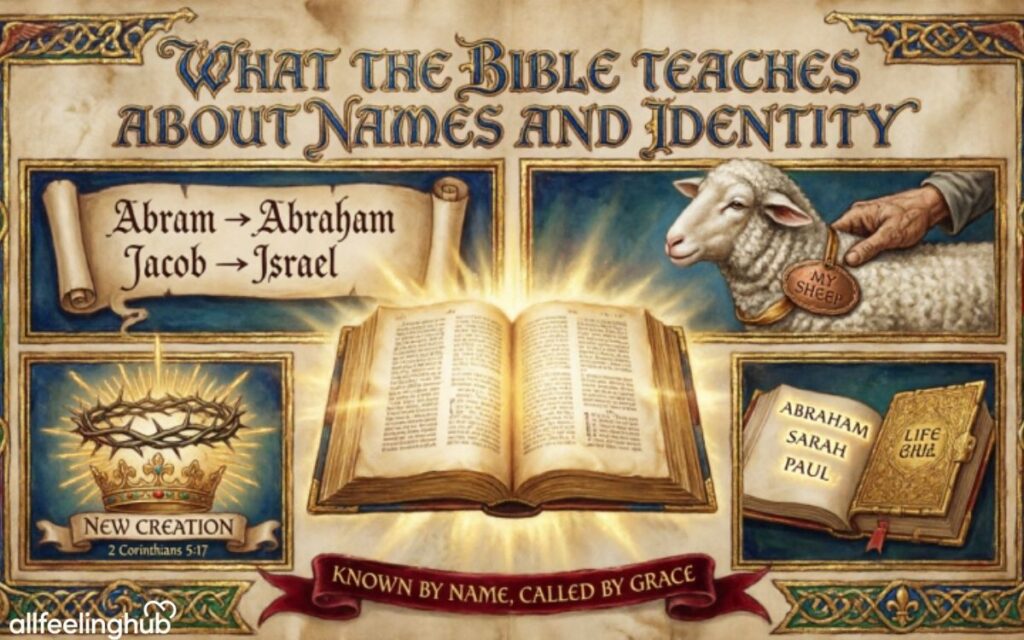
Scripture treats names as significant — but significant because of what they represent about a person’s character, calling, or relationship with God, not because of a name’s documented linguistic origin. God renames Abram to Abraham (Genesis 17:5) and Jacob to Israel (Genesis 32:28) to mark a change in identity and purpose; Simon becomes Peter, “the rock” (Matthew 16:18).
This consistent biblical pattern suggests identity is shaped through an ongoing relationship with God, not permanently fixed by a name’s origin at birth — good news for any family drawn to a strong, historic name like William that happens to have no biblical root at all.
Frequently Asked Questions
What Is the Biblical Meaning of William?
William is not mentioned in the Bible, so it has no direct biblical meaning, but its traditional meaning is “resolute protector” or “determined guardian.”
Is William Mentioned in the Bible?
No, William does not appear as a personal name in the Bible.
Is William a Biblical Name?
No, William is not a biblical name; it comes from Germanic roots rather than Hebrew or Greek.
What Is the Hebrew Meaning of William?
William has no direct Hebrew meaning because it is a Germanic name, although it can be symbolically connected with biblical qualities of protection and courage.
What Is the Spiritual Meaning of William?
Spiritually, William can represent strength, courage, determination, protection, loyalty, and responsibility.
What Is the Origin of the Name William?
William comes from the Germanic elements wil meaning “will” or “desire” and helm meaning “helmet” or “protection.”
Is William a Good Christian Name?
Yes, William is a suitable Christian name even though it is not found in Scripture.
What Bible Verses Relate to the Name William?
Bible verses about courage, protection, strength, and faithful leadership can reflect the qualities traditionally associated with William.
What Personality Traits Are Associated With William?
William is commonly associated with leadership, loyalty, courage, confidence, determination, and a protective nature.
Why Do Parents Choose the Name William?
Parents often choose William because of its classic history, strong meaning, timeless appeal, and association with courage and protection.
Conclusion
Biblical Meaning of William offers an interesting look at the spiritual qualities associated with this classic name. William is not directly mentioned in the Bible and does not have a Hebrew or biblical origin. It comes from Germanic roots and is traditionally understood to mean “resolute protector” or “determined protector.” These ideas can symbolically connect with biblical qualities such as courage, strength, responsibility, and protecting others.
Although William does not have a specific biblical meaning, its traditional significance can still hold spiritual value. The qualities of determination, bravery, and protection are meaningful virtues that can inspire a person to live with faith, integrity, and compassion. Whether you’re researching the name for personal interest or considering it for a child, William remains a strong and timeless name with positive character and spiritual symbolism.

David is a passionate writer with 4 years of experience creating heartfelt prayers, blessings, and inspirational messages. At https://allfeelinghub.com/ , he shares faith-filled content designed to inspire hope, strengthen spirituality, and bring comfort, peace, and encouragement to readers worldwide.