

Many people are curious about the Evelyn Name Meaning in the Bible and whether this beautiful name has a direct connection to Scripture. Although Evelyn is not mentioned in the Bible, it has a fascinating history and traditional roots that have given the name a lasting appeal.
In this guide, you’ll discover the origin and traditional meaning of Evelyn, whether it has Hebrew or biblical roots, and how its meaning may be understood from a Christian perspective..
What Does the Name Evelyn Mean in the Bible?

Evelyn has no meaning “in the Bible” because it never appears there — not in the Old Testament, the New Testament, or any Hebrew, Aramaic, or Greek manuscript underlying them. (cite index=”21-1″>Evelyn is not derived from Eve, nor from a combination of Eve and Lynn, even though it’s often assumed to be — its documented roots trace instead to the Norman French name Aveline</cite>, brought to Britain after the Norman Conquest of 1066.
Is Evelyn Mentioned in the Bible?
No. There is no person, place, or word named Evelyn anywhere in the Bible, in any translation. The name Evelyn as we know it didn’t exist until medieval Norman England, more than a thousand years after the biblical texts were completed.
Evelyn Name Meaning in the Bible
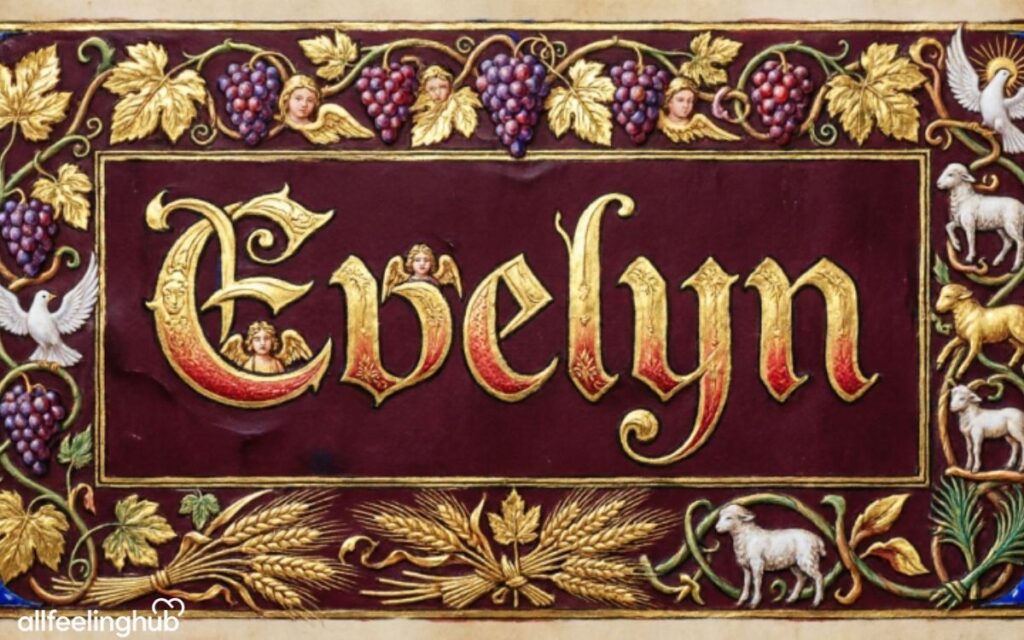
Evelyn does not appear in the Bible and is not etymologically related to Eve, despite a very common online claim that it means “life” from Hebrew. Its documented origin is Norman French, from Aveline.
Does Evelyn Have a Biblical Meaning?
Not literally. What Evelyn does have is a widespread popular association with the biblical name Eve, largely because the two names sound similar in English. This has led many baby-name websites to claim Evelyn means “life” (Eve’s Hebrew meaning) — (cite index=”21-1″>a claim that etymologists consider unfounded, since Evelyn’s real origin is entirely separate from Eve’s</cite>.
Some Christian parents still choose to draw a spiritual connection between the two names anyway, which is a legitimate personal choice, but it’s worth knowing it isn’t based on documented linguistic fact.
The Origin and History of the Name Evelyn
(cite index=”22-1″>Evelyn began as an English surname, derived from the medieval girl’s name Aveline, itself a Norman French diminutive of Ava</cite>. (cite index=”21-1″>Aveline quickly developed into the form “Evelyn” in Norman England; both names became rare after the Middle Ages, but Evelyn survived as a surname</cite>.
(cite index=”21-1″>Among the aristocracy, it became common to give sons their mother’s maiden surname as a first name, which is how Evelyn began to be used as a given name for boys starting in the 17th century</cite>, before becoming almost entirely associated with girls in more recent centuries.
Evelyn Meaning in Hebrew
Evelyn has no Hebrew origin or meaning. Its documented roots are Germanic and Norman French, not Hebrew, and it shares no linguistic connection with the Hebrew Bible’s vocabulary.
This is worth stating clearly, since the popular (but incorrect) claim that Evelyn means “life” specifically relies on borrowing Eve’s genuine Hebrew etymology and misapplying it to a name that isn’t actually related.
Evelyn Meaning in Greek
Evelyn has no Greek origin either. No ancient Greek word or name corresponds to it, and it doesn’t appear in the Greek New Testament or in any Hellenistic-era text.
Like its non-existent Hebrew connection, any claimed Greek meaning for Evelyn is not supported by documented etymology.
Is Evelyn a Hebrew or Biblical Name?
No, on both counts. Evelyn is a name of Norman French and ultimately Germanic origin — not Hebrew and not biblical. It stands in the same category as many beloved names used by Christian families today (like Charlotte, William, or Amelia) that carry no biblical pedigree at all, despite being common, meaningful names within Christian communities.
Spiritual Meaning of the Name Evelyn
While not biblical by origin, Evelyn’s spiritual meaning today is largely shaped by two things: its phonetic closeness to “Eve” (evoking themes of life and new beginnings) and (cite index=”23-1″>alternate theories tying it, through the Irish name Éibhleann, to meanings of “radiance” and “beauty”</cite>.
Together, these popular associations have given Evelyn a reputation as a name evoking light, grace, and vitality — even though, strictly speaking, these are modern interpretive layers rather than documented original meanings.
Christian Meaning and Significance of Evelyn
Christian parents who choose Evelyn often bring their own spiritual significance to it, most commonly built around the Eve association (life, new beginnings) or the “light/radiance” association drawn from its Irish variant forms.
This is a meaning families construct intentionally through naming and upbringing, similar to how many non-biblical names take on real spiritual weight within Christian households through prayer and intention rather than etymology.
Biblical Symbolism Associated With Evelyn
Because of its popular (if etymologically unfounded) link to Eve, some Christian families associate Evelyn with symbolism drawn from Genesis — the “mother of all living” (Genesis 3:20), new life, and beginnings.
Others draw on the “radiance” and “beauty” meanings suggested through the Irish Éibhleann connection, associating the name with light-related biblical imagery like Matthew 5:14’s description of believers as “the light of the world.”
What Does Evelyn Symbolize Spiritually?

Spiritually, Evelyn tends to symbolize whichever theme a family chooses to emphasize: life and renewal (via the Eve association), or light, grace, and beauty (via the radiance-linked Irish variant).
Neither symbolism comes from the name’s actual Norman French and Germanic roots, but both are common, sincere, and meaningful interpretations many parents bring to the name today.
Bible Verses That Reflect Evelyn’s Meaning
These verses don’t mention Evelyn, but reflect the biblical themes of light, grace, and life often associated with the name:
- Genesis 3:20 – “And Adam called his wife’s name Eve; because she was the mother of all living.”
- Matthew 5:14 – “Ye are the light of the world. A city that is set on an hill cannot be hid.”
- John 1:4 – “In him was life; and the life was the light of men.”
- 2 Corinthians 12:9 – “…My grace is sufficient for thee: for my strength is made perfect in weakness.”
- Psalm 36:9 – “For with thee is the fountain of life: in thy light shall we see light.”
- John 10:10 – “…I am come that they might have life, and that they might have it more abundantly.”
Biblical Qualities Associated With the Name Evelyn
Since Evelyn has no biblical origin, any “biblical qualities” tied to it reflect values a family chooses to associate with the name rather than Scripture itself.
Common choices include vitality and love of life, grace under difficulty, and a light-bearing, encouraging presence — qualities drawn from the Bible’s broader teaching on life and light rather than from the name’s linguistic history.
The Meaning of Evelyn as “Life” and “Living”
This is the single most common claim made about Evelyn online, and it’s worth addressing directly: (cite index=”21-1″>Evelyn does not actually mean “life,” and the belief that it does — by association with Eve — is not supported by its real etymology</cite>.
The genuine Hebrew name that means “life” is Eve (Chavah, חַוָּה), referenced in Genesis 3:20. Evelyn’s actual documented roots point instead to the Germanic name Ava, with proposed meanings including “desired” or a root related to “water” or “island” — none of which relate to “life” at all.
Evelyn and the Biblical Theme of Life
Even though Evelyn doesn’t etymologically mean “life,” the biblical theme of life is rich enough that many Christian parents connect it to the name anyway, largely through its resemblance to Eve. Scripture treats life — physical and spiritual — as one of its central themes, from Eve’s title as “the mother of all living” (Genesis 3:20) to Jesus’ declaration in John 10:10 that He came “that they might have life…more abundantly.”
Families drawn to this theme often name a daughter Evelyn with that broader biblical concept of life in mind, even knowing the name itself isn’t the historical source of it.
Evelyn and Christian Faith

Evelyn carries no built-in doctrinal content, but it has been used comfortably by Christian families for centuries, particularly since its 17th-century revival as a given name in England.
Its meaning within a family’s Christian faith comes entirely from the intention, prayer, and values that family brings to it — not from any inherent religious content in the name’s Norman French and Germanic history.
Is Evelyn Considered a Christian Name?
Not historically in origin — Evelyn is a secular Norman French/Germanic name, with no tie to any biblical figure, saint, or Christian tradition at its root.
Like many Western names, however, it has been widely used by Christian families for generations simply because it was part of the broader English and European Christian culture, not because of any inherent religious meaning.
Can Evelyn Have a Spiritual Meaning Without Being Biblical?
Yes. A name doesn’t need scriptural origin to carry real spiritual meaning for a family — that meaning can come from the prayers spoken over a child, the character a family hopes to nurture, and the way a name is lived out over a lifetime.
Many treasured names among Christian families (Grace as a virtue name aside) — Charlotte, Amelia, Evelyn — have no biblical root at all, yet carry deep significance for the families who choose them.
Evelyn in Christian History and Tradition
Evelyn doesn’t have a distinct place in formal Christian tradition — there’s no saint, feast day, or biblical figure tied specifically to the name.
Its association with Christian culture comes instead from its long popularity as a given name within English-speaking and European Christian societies, particularly since the 17th century, rather than from any specific religious veneration or origin.
Evelyn Name at a Glance
| Detail | Information |
| Documented origin | Norman French (Aveline), from Germanic Ava |
| Popular claimed origin | Hebrew, via “Eve” (etymologically unfounded) |
| Proposed original meanings | “Desired”; a Germanic root for “water/island”; folk meaning “hazelnut” |
| Biblical origin | None — does not appear in Scripture |
| Hebrew/Greek origin | None |
| Gender | Historically unisex; predominantly feminine since the 20th century |
| Popularity | Among the top 10 girls’ names in the U.S. in recent years |
| Common variants | Eveline, Evelyne, Eveleen, Evelin, Evelien |
| Related Irish forms | Aveline → Eibhlín → Eileen; also linked to Éibhleann (“radiance”) |
Evelyn in English and European Naming Traditions

(cite index=”22-1″>Evelyn spread widely as a given name across English-speaking regions, and also gained use in Germany and Estonia</cite>. (cite index=”21-1″>In Ireland, the related name Aveline developed into Eibhlín and then Eileen</cite>, giving Evelyn a network of related forms across multiple European naming traditions, all tracing back to the same Norman French and Germanic roots.
Evelyn Name Meaning for Girls and Boys
(cite index=”22-1″>Evelyn began as a matronymic surname before being adopted as a given name in the 17th century — initially more common for boys, particularly among aristocratic families who passed down mothers’ maiden surnames as first names</cite>. (cite index=”25-1″>Over time it shifted to become regarded as almost entirely feminine, likely influenced by its phonetic similarity to Eve and Evelina</cite>, though it remains recognized as a unisex name in some historical and international contexts today.
Evelyn vs. Eveline: Meaning and Differences
Evelyn and Eveline share the exact same root — both descend directly from the Norman French Aveline. (cite index=”22-1″>Eveline is listed among Evelyn’s direct variant forms</cite>, differing only in spelling and pronunciation rather than in origin or meaning.
Neither name carries a documented connection to “Eve” or Hebrew, despite Eveline’s even closer visual resemblance to Eve.
Popular Variations and Spellings of Evelyn
(cite index=”22-1″>Common variant forms include Eveline, Evelyne, Eveleen, Evelin, and Evelien</cite>. Related names in other languages and traditions include Aveline (the original Norman French form), Eibhlín and Eileen (Irish), Aibhilín (an Irish variant form), and Éibhleann, which some scholars connect to Evelyn through a separate Old Irish root meaning “radiance” or “beauty.”
Personality Traits Associated With the Name Evelyn
Outside any biblical framework, popular naming culture associates Evelyn with traits like elegance, warmth, old-fashioned charm, and quiet strength — largely shaped by its vintage popularity and literary associations (such as the character Evelyn Hugo from The Seven Husbands of Evelyn Hugo).
These associations are cultural rather than etymological, and a name’s popular reputation doesn’t determine a child’s actual character.
Evelyn’s Popular Meaning vs. Genuinely Biblical “Life” Names
| Name | Language | Documented Meaning | Biblical Connection |
| Evelyn | Norman French/Germanic | “Desired” (disputed); no true link to “life” | None |
| Eve (Chavah) | Hebrew | “Life” or “living” | Genesis 3:20 |
| Zoe | Greek | “Life” | Used throughout the New Testament |
| Chaya | Hebrew | “Life,” same root as Eve | Related to Genesis 3:20 |
| Eveline | Norman French | Same root as Evelyn (Aveline) | None |
Biblical Names Similar to Evelyn

While no biblical name shares Evelyn’s actual etymology, a few carry phonetic or thematic overlap:
- Eve – the genuinely Hebrew name (Chavah) meaning “life,” often confused with Evelyn despite no real linguistic connection.
- Elizabeth – Hebrew for “God is my oath,” sharing some phonetic rhythm with Evelyn.
- Eve-related compounds like Evangeline (Greek, “bringer of good news”) are sometimes confused with Evelyn due to their similar sound, though Evangeline has a distinct and genuinely Greek etymology.
Names With Meanings Related to Life
For parents drawn to Evelyn’s popular “life” association but wanting a name with documented biblical roots, a few genuine options exist:
- Eve (Chavah) – Hebrew for “life” or “living,” directly from Genesis 3:20.
- Zoe – Greek for “life,” used in the New Testament and popular among Christian families for its direct, authentic meaning.
- Chaya – a Hebrew name directly derived from the same root as Eve’s name, also meaning “life.”
Why Christian Parents Choose the Name Evelyn
Christian parents typically choose Evelyn for reasons that have little to do with its actual etymology: its vintage elegance, its soft and classic sound, its steady popularity, and the meaningful (if not strictly accurate) association many families draw between it and Eve’s biblical theme of life. Others simply love the name for its own sake, without concern for whether it traces back to Scripture at all.
Is Evelyn a Good Christian Baby Name?
There’s no doctrinal reason it wouldn’t be. The Bible doesn’t require Christian parents to choose only biblical names, and Evelyn — currently one of the most popular girls’ names in the United States — is a widely embraced choice among Christian families.
What matters most to most parents is the character and faith they nurture in a child as they grow, not the linguistic origin of the name itself.
What the Bible Teaches About Names and Identity

Scripture treats names as significant — but significant because of what they represent about a person’s character, calling, or relationship with God, not because of a name’s documented linguistic origin. God renames Abram to Abraham (Genesis 17:5) and Jacob to Israel (Genesis 32:28) to mark a change in identity and purpose; Simon becomes Peter, “the rock” (Matthew 16:18).
This consistent biblical pattern suggests identity is shaped through an ongoing relationship with God, not permanently fixed by a name’s origin at birth — which is good news for any family drawn to a beautiful name like Evelyn that happens to have no biblical root at all.
Common Misconceptions About Evelyn’s Biblical Meaning
- Misconception: Evelyn means “life” because it’s related to Eve. Reality: (cite index=”21-1″>this claim is etymologically unfounded — Evelyn’s real roots trace to the unrelated Norman French name Aveline</cite>.
- Misconception: Evelyn is a Hebrew name. Reality: it’s Norman French and Germanic in origin.
- Misconception: Evelyn appears in the Bible. Reality: it appears nowhere in Scripture.
- Misconception: Evelyn has one agreed-upon meaning. Reality: even secular etymologists disagree on Aveline’s original meaning, with theories including “desired,” a Germanic root for “water” or “island,” and the unrelated folk meaning “hazelnut.”
Frequently Asked Questions
What Does the Name Evelyn Mean in the Bible?
Evelyn is not directly mentioned in the Bible, so it has no specific biblical meaning, but it is often associated with meanings such as “desired,” “wished-for,” or “life.”
Is Evelyn Mentioned in the Bible?
No, Evelyn does not appear as a personal name in the Bible.
Is Evelyn a Biblical Name?
No, Evelyn is not considered a biblical name because it developed from European naming traditions rather than biblical Hebrew.
What Is the Origin of the Name Evelyn?
Evelyn developed from the medieval English name Aveline, which is associated with Norman French and Germanic naming traditions.
What Is the Hebrew Meaning of Evelyn?
Evelyn has no direct Hebrew meaning, although parents may connect it symbolically with biblical themes such as life, grace, and blessing.
What Is the Spiritual Meaning of Evelyn?
Spiritually, Evelyn can symbolize life, hope, grace, beauty, and the blessing of being deeply cherished.
Is Evelyn a Good Christian Name?
Yes, Evelyn can be a beautiful Christian name even though it does not appear in Scripture.
What Bible Verses Relate to the Name Evelyn?
Verses about life, hope, grace, and God’s blessings can symbolically complement the qualities associated with Evelyn.
What Personality Traits Are Associated With Evelyn?
Evelyn is commonly associated with kindness, grace, compassion, strength, sensitivity, and a caring nature.
Why Do Parents Choose the Name Evelyn?
Parents often choose Evelyn because it has a timeless sound, elegant history, and positive associations with life, love, and grace.
Conclusion
Evelyn Name Meaning in the Bible is a fascinating topic for anyone exploring the spiritual background of this beautiful name. Evelyn is not directly mentioned in the Bible and does not have a traditional Hebrew or biblical origin. The name developed from European naming traditions and is often associated with meanings such as “desired,” “wished-for child,” or “life,” depending on the interpretation and historical source.
Although Evelyn has no direct biblical meaning, it can still carry positive spiritual symbolism. Ideas such as being cherished, valued, and grateful for life can connect naturally with Christian values found throughout Scripture. Whether you’re considering Evelyn as a baby name or researching its spiritual significance, it remains a graceful and timeless name with a rich history and uplifting associations.

David is a passionate writer with 4 years of experience creating heartfelt prayers, blessings, and inspirational messages. At https://allfeelinghub.com/ , he shares faith-filled content designed to inspire hope, strengthen spirituality, and bring comfort, peace, and encouragement to readers worldwide.