

Many readers wonder about Mazikeen in the Bible after encountering the name in modern television, comics, and popular culture. Although Mazikeen is often portrayed as a demon or supernatural figure, the character is not mentioned in the Bible. Understanding the difference between biblical teachings and later fictional or folkloric traditions can help clear up common misconceptions about who Mazikeen is and where the name comes from.
In this guide, you’ll explore the origins of Mazikeen, whether the name has any connection to biblical demons, and what Scripture actually says about demons and spiritual beings. You’ll also learn how the modern portrayal of Mazikeen differs from biblical descriptions, giving you a clearer and more accurate perspective on Mazikeen in the Bible..
Is Mazikeen Mentioned in the Bible?
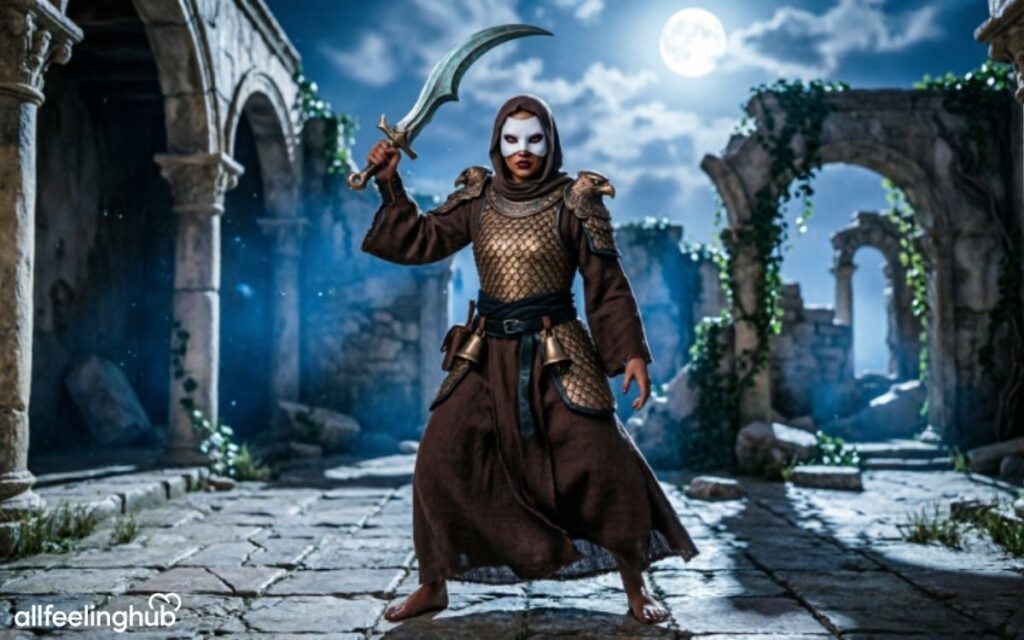
No. Mazikeen, as a name or a specific demon, does not appear anywhere in the Old Testament or New Testament, in any language or translation. (cite index=”7-1″>The character “Mazikeen” as a singular named demon was created by writer Neil Gaiman for DC Comics in 1990, first appearing in The Sandman #22</cite>.
What does have a genuine ancient history is the broader term the name is drawn from — mazikin, a class of harmful spirits described in the Talmud, a foundational text of Rabbinic Judaism that is separate from, and postdates, the Hebrew Bible.
Is Mazikeen a Real Demon?
Not as an individual, named being — that part is fiction. But (cite index=”7-1″>the beings called Mazikin appear throughout Talmudic literature as legitimate supernatural entities in Jewish demonology</cite>, so the category of spirit Gaiman drew from is real within Jewish religious tradition, even though no single historical or religious source describes an individual demon named “Mazikeen” the way the comics and TV series do.
What the Talmud Says About Mazikin
(cite index=”2-1″>The Talmud contains various descriptions of mazzikin throughout its pages, though these descriptions aren’t entirely uniform or consistent</cite>. (cite index=”2-1″>In tractate Hagigah 16a, the Talmud describes mazzikin as sharing characteristics with both angels and humans — like angels, they have wings and can travel great distances quickly, and like humans, they eat, drink, reproduce, and eventually die</cite>. (cite index=”4-1″>Other Talmudic passages describe folk methods for detecting them, such as sprinkling fine ashes around one’s bed to reveal footprints resembling a rooster’s</cite>, and (cite index=”4-1″>reciting the Shema before sleep as a form of protection</cite>.
Mazikeen Mythology
Jewish folklore around mazikin developed across many centuries and sources, resulting in several different (and sometimes conflicting) origin stories. (cite index=”16-1″>One tradition, found in Pirkei Avot 5:6, lists demons among items some sages said were created at twilight on the very eve of the first Sabbath</cite> — a liminal, “unfinished” moment of creation.
(cite index=”3-1″>A separate rabbinic tradition holds that Adam fathered spirits, demons, and night-spectres during a period of separation from Eve after the Fall</cite>. (cite index=”1-1″>Later medieval Kabbalistic tradition offered yet another origin, associating the birth of mazzikim with spilled seed</cite>.
Understanding the Origin of the Name Mazikeen
(cite index=”8-1″>The name Mazikeen is derived from the Hebrew root mazik (מזיק), meaning “one who harms” or “damaging one.” The plural, Mazikin, refers to the class of harmful spirits described in Talmudic writings</cite>.
Gaiman’s spelling — “Mazikeen” — anglicizes and individualizes what was originally a plural, general term for a category of spirit, not a personal name.
Cultural and Spiritual Significance of the Name Mazikeen
Within Jewish tradition, mazikin were significant less as individual figures and more as an explanation for unseen misfortune — a way of accounting for the small, unexplained harms and dangers of daily life within a worldview centered on God’s ultimate authority. (cite index=”1-1″>Even though they caused harm, they were generally understood to operate under God’s command, delivering His judgment rather than acting as fully independent evil forces</cite> — a meaningfully different theological picture than the more autonomous, rebellious demons familiar from later Christian tradition.
What Kind of Demon Is Mazikeen in the Bible?
This is where the premise of the question needs correcting: Mazikeen isn’t a demon described in the Bible at all. The Bible does describe unclean spirits and demonic forces (see the next section), but it never uses the term “mazikin” or describes a being by that name. Any answer describing “what kind of demon Mazikeen is” is necessarily drawing from Talmudic folklore or from the DC Comics/Lucifer fictional universe — not from Scripture.
Mazikeen in Jewish Folklore and Tradition
(cite index=”1-1″>Mazikin were believed to inhabit specific kinds of places — uninhabited wild areas, bathhouses, outhouses, ritually impure locations, deep shadows, and especially nut trees</cite>, and (cite index=”1-1″>they were thought to linger under roofs and rain gutters on moonlit nights</cite>. (cite index=”1-1″>Folk tradition generally held that mazikin only attacked when angered or provoked, and that the wisest approach was coexistence — learning to live peacefully alongside them rather than attempting to eliminate them entirely</cite>, an approach some later commentators compared to feng shui.
Mazikeen in Modern Popular Culture
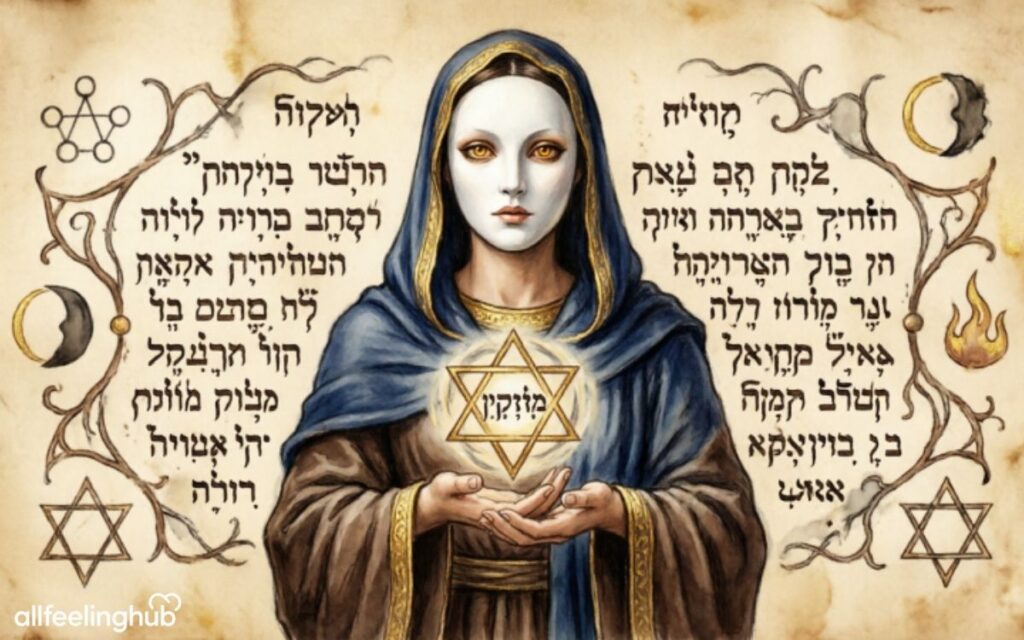
(cite index=”7-1″>Mazikeen debuted as a character created by Neil Gaiman for The Sandman #22 in 1990</cite>, later appearing as a major supporting character in the Lucifer comic book spin-off and, more recently, in the Lucifer television series (2016-2021), where she serves as Lucifer Morningstar’s loyal friend and bodyguard. (cite index=”7-1″>In the comics, her mother is identified as Lilith, described in Jewish folklore as Adam’s first wife, and her father as Ophur, a serpent demon — though her father is left unnamed in the TV series</cite>.
Mazikeen in Lucifer: Fiction vs. Religious Tradition
It’s worth being precise about where the fictional character departs from — and borrows from — actual Jewish tradition. See Table 1 below for a direct comparison, but the short version: (cite index=”7-1″>Gaiman intentionally borrowed the ancient Hebrew/Aramaic term to give his character mythological depth and weight, but the individual character, her appearance, backstory, and personality are entirely his own creative invention rather than a retelling of any specific religious source</cite>.
What the Bible Says About Demons
Scripture does describe demonic beings, though using different terminology than Talmudic literature. The Old Testament references shedim (translated “devils” in some older translations, appearing in Deuteronomy 32:17 and Psalm 106:37) and se’irim (“goat-demons” or “satyrs,” referenced in Leviticus 17:7 and Isaiah 13:21, 34:14).
The New Testament describes “unclean spirits” and demons extensively in the Gospels, particularly in accounts of Jesus casting out demons from afflicted individuals (Mark 5:1-13, Matthew 8:28-32, Luke 8:26-39).
Are Mazikeen Part of Biblical Demonology?
No — mazikin belong to post-biblical Jewish tradition (the Talmud and later rabbinic literature), not to the Bible’s own demonology. Biblical demonology uses different terms (shedim, se’irim, unclean spirits) and, in the New Testament particularly, frames demons within a more explicitly adversarial cosmic conflict between God’s kingdom and Satan’s — a framework Talmudic mazikin lore doesn’t map onto directly.
Mazikeen and Ancient Jewish Beliefs
Belief in mazikin was widespread enough in the ancient and early medieval Jewish world that (cite index=”2-1″>Aramaic-speaking Jewish communities in Mesopotamia and the Levant produced incantation bowls — inscribed pottery meant to protect households from mazzikin, lilin, shedim, and other harmful spirits — well into the Geonic period</cite>.
This practice reflects how seriously these beliefs were held as a practical, everyday concern rather than merely a literary or theological abstraction.
How Mazikin Are Described in Jewish Tradition
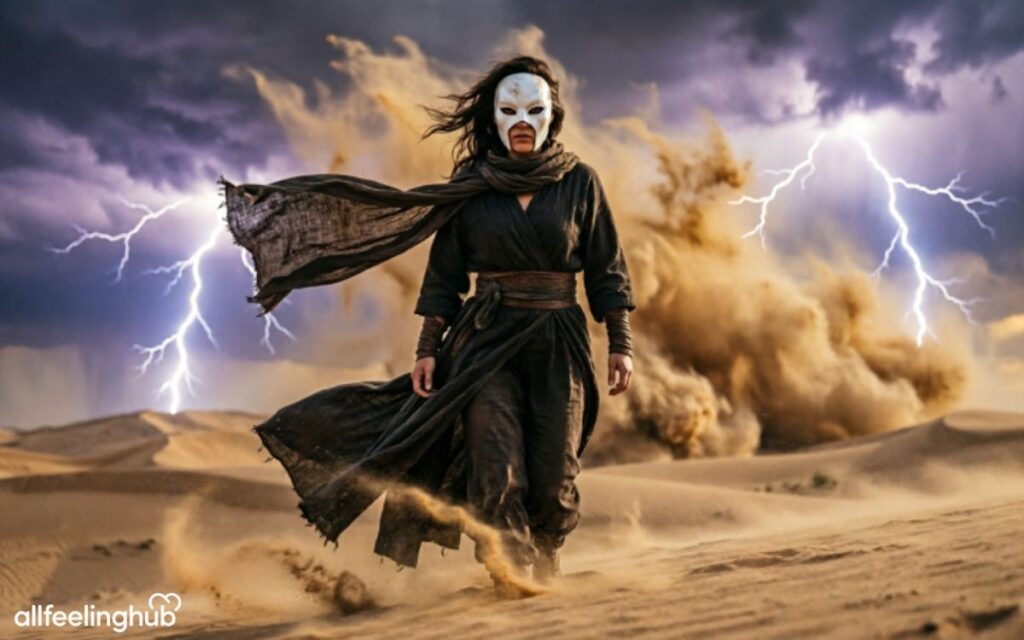
(cite index=”2-1″>Talmudic descriptions of mazzikin are notably inconsistent across different passages, rather than presenting one unified portrait</cite>.
Common threads include their invisibility, their angel-like and human-like hybrid nature (Hagigah 16a), their tendency to inhabit specific “liminal” or unclean places, and their general role as causes of minor accidents, illness, and misfortune rather than as agents of large-scale cosmic evil.
Mazikeen — Fiction vs. Jewish Religious Tradition
| Aspect | Talmudic Mazikin (Religious Tradition) | Mazikeen (Lucifer Comics/TV Character) |
| Nature | A broad class of spirits, not individuals | A single, named individual demon |
| Creator/Source | Ancient rabbinic tradition (Talmud, Pirkei Avot) | Created by Neil Gaiman, 1990, for DC Comics |
| Appearance | Invisible in most Talmudic descriptions | Visually depicted; half-skeletal face in comics (Lilim heritage) |
| Parentage | Not applicable (a class of beings, not a family) | Comics: daughter of Lilith and Ophur |
| Role | Causes everyday accidents, illness, misfortune | Lucifer Morningstar’s loyal friend and bodyguard |
| Moral framing | Operates under God’s command, delivering judgment | Complex, sympathetic character with her own arc |
| First appearance | Referenced across Talmudic tractates (e.g., Hagigah 16a) | The Sandman #22 (1990) |
Does Mazikeen Have a Biblical or Hebrew Origin?
It has a Hebrew (and Jewish Babylonian Aramaic) origin, but not a biblical one. (cite index=”8-1″>The name is rooted in the Hebrew root mazik, referenced in Talmudic writings — not in the Hebrew Bible itself</cite>. This distinction — Hebrew/Aramaic language origin versus actual scriptural origin — is the key nuance many “Mazikeen in the Bible” search queries miss.
Mazikeen vs. Demons Described in Scripture
Biblical demons, particularly in the Gospels, are consistently depicted as hostile, unclean spirits that possess or afflict people and are cast out by Jesus with direct spiritual authority.
Talmudic mazikin, by contrast, are described more as an ambient hazard of daily life — nuisances and dangers that exist within specific places and can largely be avoided or managed through ritual practice, rather than beings requiring exorcism in the biblical sense.
The Difference Between Mazikin and Biblical Demons
The clearest differences are in origin story, moral framing, and function. Mazikin have multiple, sometimes conflicting Talmudic origin stories (created at twilight before the first Sabbath, born from Adam during a period of separation, or from other Kabbalistic causes) and are generally described as operating under God’s authority even while causing harm.
Biblical demons are consistently framed as rebellious spiritual beings aligned against God, cast out through the authority of Jesus’ name rather than managed through folk protective practices.
Spiritual Meaning Associated With Mazikeen
For readers drawn to the name today — whether through the Lucifer franchise or genuine interest in Jewish folklore — its spiritual meaning centers on the concept of “harm” or “damage” (from the Hebrew root mazik) and, more broadly, on the ancient human impulse to name and categorize unseen sources of misfortune.
It carries no inherent Christian or biblical spiritual significance, since it originates from a specific, later stream of Jewish folk tradition rather than from Scripture.
Mazikeen in Religious and Cultural History
Belief in mazikin persisted from the Talmudic period through the medieval Geonic era and into later Kabbalistic literature, evolving considerably along the way — from largely ambient, God-commanded nuisance spirits in early rabbinic sources to, in some later medieval traditions, beings connected with more specific moral transgressions or the tormented souls of the wicked dead.
This long evolution reflects how folk demonology often develops cumulatively across centuries rather than being fixed by a single authoritative text.
Common Misunderstandings About Mazikeen
- Misunderstanding: Mazikeen is a demon named in the Bible. Reality: the name and character never appear in Scripture at all.
- Misunderstanding: Mazikeen the character is drawn directly from a specific religious text. Reality: she’s an original character created by Neil Gaiman in 1990, who borrowed an ancient term for mythological flavor.
- Misunderstanding: Mazikin and biblical demons are the same concept with different names. Reality: they come from different bodies of literature (Talmud vs. Bible) with meaningfully different theological framing.
- Misunderstanding: Jewish tradition presents one consistent, agreed-upon account of mazikin. Reality: Talmudic and later sources offer several different, sometimes conflicting origin stories and descriptions.
How Mazikin Were Believed to Affect Human Life
According to Talmudic and later folk tradition, mazikin were blamed for a range of everyday misfortunes — minor accidents, sudden illness, disturbing nightmares, and general bad luck — rather than dramatic possession or large-scale catastrophe.
(cite index=”4-1″>Protective practices included reciting the Shema before sleep, and folk methods claimed to allow people to detect mazikin’s presence through footprints in ashes sprinkled near a bed</cite>, reflecting how these beliefs shaped ordinary, practical aspects of daily life and household ritual.
Talmudic Mazikin vs. Demons Described in Scripture
| Category | Talmudic Mazikin | Biblical Demons |
| Primary source text | Talmud and later rabbinic literature | Old and New Testament |
| Hebrew/Greek term | Mazikin (מזיקין), from Aramaic | Shedim, se’irim (Hebrew); daimonion, unclean spirits (Greek) |
| Relationship to God | Generally under God’s command | Rebellious, opposed to God’s kingdom |
| Primary danger | Minor accidents, illness, everyday misfortune | Possession, spiritual affliction |
| How they are addressed | Ritual protection, avoidance, coexistence | Cast out through direct spiritual authority (e.g., Jesus’ name) |
| Individual named figures | Rare; typically described collectively | Legion (Mark 5:9) is a notable named/self-identified example |
Mazikin in Jewish Supernatural Beliefs
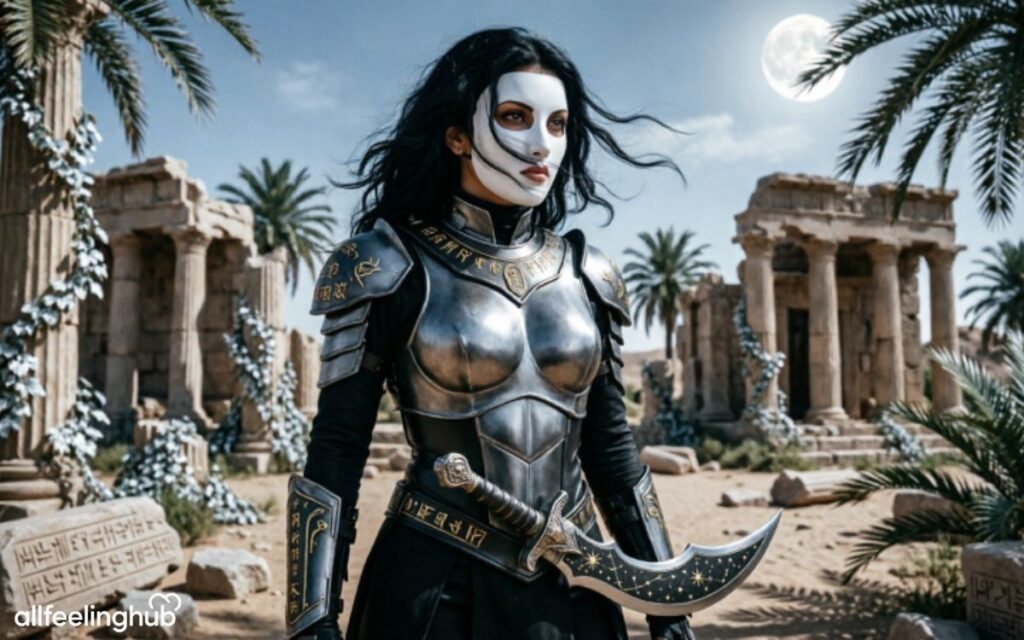
Mazikin sit alongside other classes of spirits in Jewish supernatural tradition, including shedim (a broader category of demons) and lilin (spirits associated with Lilith). (cite index=”2-1″>Incantation bowls used by both practicing Jews and rabbis during the Geonic period were designed to protect against this whole range of spirits collectively</cite>, suggesting these categories often overlapped in practical folk religious use even when rabbinic texts treated them as somewhat distinct.
Historical Context of Mazikin in Ancient Judaism
(cite index=”2-1″>Mainstream Judaism today does not often directly discuss evil spirits</cite>, but belief in beings like mazikin was far more prominent in the late antique and early medieval periods, particularly among Aramaic-speaking Jewish communities in Babylonia (modern-day Iraq) during the Talmudic and Geonic eras.
This historical context matters: these beliefs reflect the broader supernatural worldview of the ancient Near East generally, shared in various forms across Jewish, Christian, and other regional traditions of the period, rather than being a uniquely or permanently defining feature of Jewish theology.
How Mazikin Differ From Other Spiritual Beings
Compared to angels in Jewish tradition, mazikin lack angels’ clear alignment with God’s direct will and glory, despite sharing some physical characteristics (wings, speed of travel) according to Hagigah 16a. Compared to shedim more broadly, mazikin are often described as a more specifically harm-focused subset.
Compared to named demonic figures like Lilith or Agrat bat Mahlat, who have individual identities and detailed stories in Jewish folklore, mazikin are typically described collectively, as an ever-present class of minor hazard rather than as individual, named personalities — which is part of why Neil Gaiman’s decision to make “Mazikeen” a single, named individual character was a creative departure from the traditional source material.
What Mazikeen Represents in Modern Religious Discussions
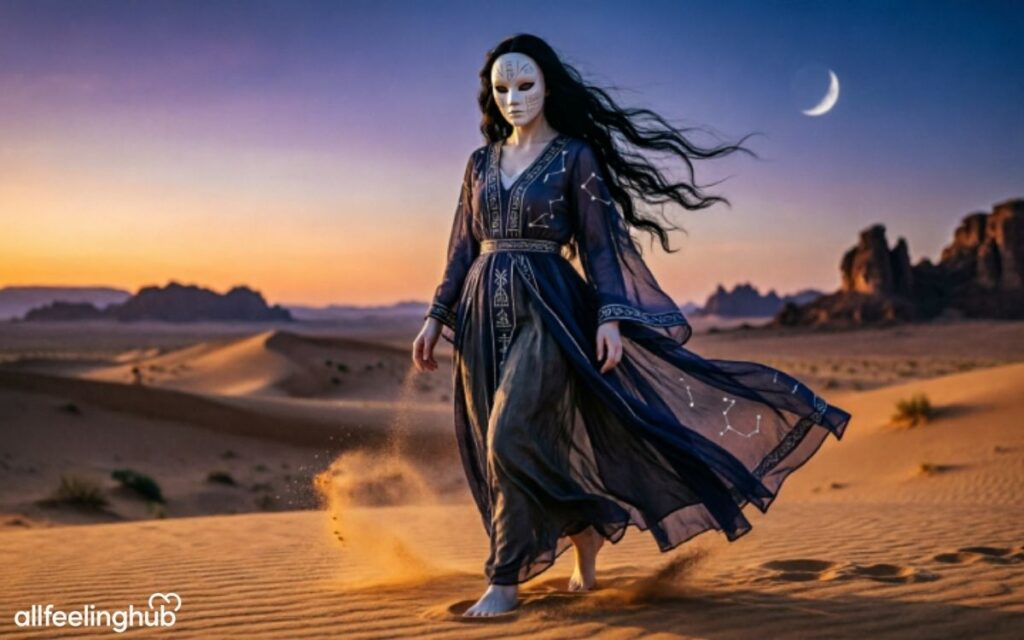
In contemporary discussions — largely driven by the popularity of the Lucifer franchise — Mazikeen has become a talking point for a broader conversation about the difference between religious folklore and biblical Scripture, and about how popular media borrows real religious terminology for fictional storytelling.
For many Christian writers addressing the topic, the discussion becomes an opportunity to clarify that Scripture, not the Talmud or modern fiction, remains the authoritative source for Christian understanding of the demonic — while still acknowledging that Jewish folklore around mazikin is a genuine and historically significant part of religious tradition in its own right.
Frequently Asked Questions
Is Mazikeen Mentioned in the Bible?
No, Mazikeen is not mentioned in the Bible and is not a biblical character.
What Does Mazikeen Mean?
Mazikeen is commonly associated with Jewish folklore and the Hebrew term mazzikim, referring to harmful or mischievous spirits.
What Are Mazikeen According to Jewish Tradition?
In Jewish folklore, mazzikim are supernatural beings believed to cause harm or trouble, although traditions about them vary.
Is Mazikeen a Demon in the Bible?
No, the Bible does not identify a demon named Mazikeen; the concept comes from later Jewish folklore rather than Scripture.
Where Did the Idea of Mazikeen Come From?
The idea is connected to Jewish folklore and traditions surrounding mazzikim, supernatural beings discussed in some later Jewish writings.
Is Mazikeen a Hebrew Name?
Mazikeen is related to the Hebrew term mazzikim, but the modern spelling “Mazikeen” is not a standard biblical Hebrew name.
Are Mazikeen Demons or Evil Spirits?
In folklore, mazzikim are sometimes described as harmful spirits, but they should not be confused with a specific demon named Mazikeen in the Bible.
Does the Bible Talk About Mazzikim?
The Hebrew Bible does not contain the later folklore concept of mazzikim as it appears in Jewish tradition.
Is Mazikeen Mentioned in Christianity?
Mazikeen is not a recognized biblical figure in Christianity and does not appear in the Christian Bible.
What Is the Spiritual Meaning of Mazikeen?
Mazikeen has no established biblical spiritual meaning, but its folklore connection gives it associations with supernatural beings and spiritual danger.
Conclusion
Mazikeen in the Bible is a topic that often creates confusion because the name is sometimes associated with demons or supernatural beings. However, Mazikeen is not mentioned in the Bible. The name is connected to Jewish folklore, particularly the mazzikin, supernatural beings believed in later Jewish tradition to cause harm or trouble. This tradition should not be confused with the biblical text itself.
Ultimately, Mazikeen has a stronger connection to Jewish folklore and modern fictional storytelling than to Scripture. If you’re researching the name from a Christian perspective, it is important to distinguish biblical teachings from later legends and popular culture. Understanding this difference provides a clearer picture of what the Bible actually says about spiritual beings, evil, and the unseen world.

David is a passionate writer with 4 years of experience creating heartfelt prayers, blessings, and inspirational messages. At https://allfeelinghub.com/ , he shares faith-filled content designed to inspire hope, strengthen spirituality, and bring comfort, peace, and encouragement to readers worldwide.